
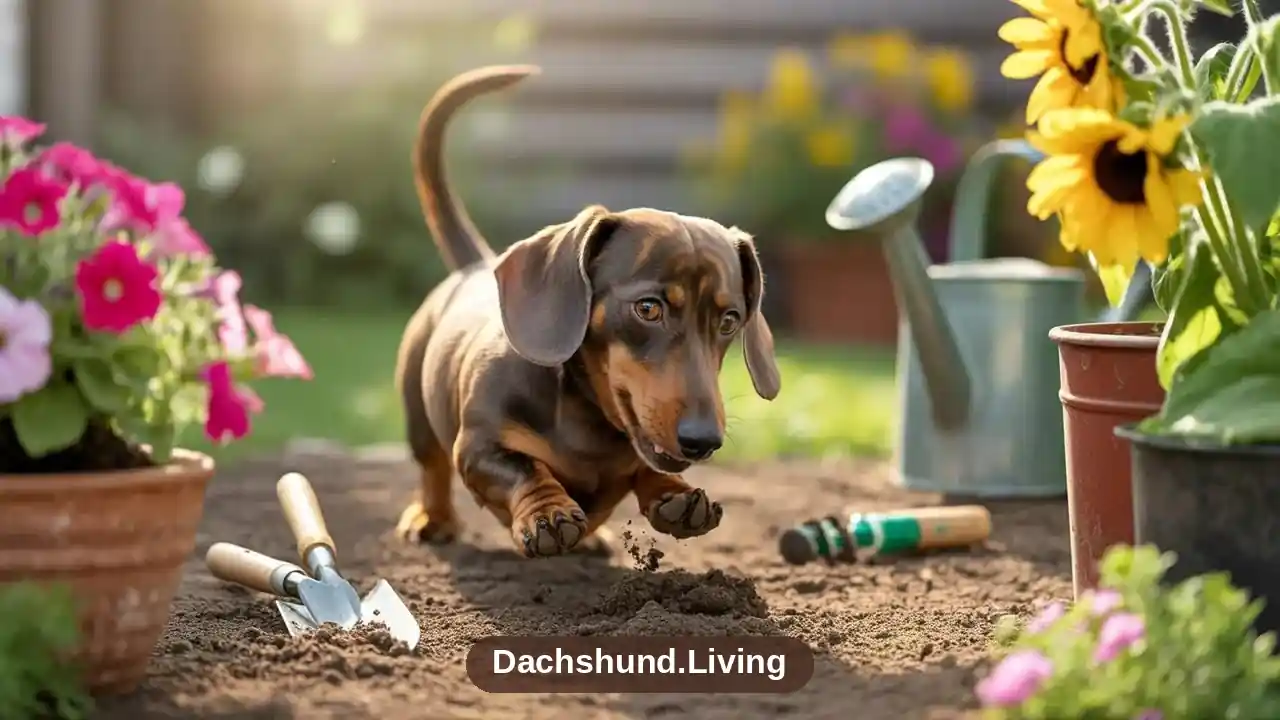

Five minutes. That is all it took, the first spring we had a proper garden. I went in to make tea, came back out, and my best flowerbed looked like someone had been digging for buried treasure in it.
My dachshund stood in the middle of the mess, chest deep in soil, tail going like a flag. He was not sorry. He was proud.
If that scene sounds familiar, take some comfort from this. Your dog is not spiteful, and he is probably not badly trained either. In most cases he is doing exactly what dachshunds were built to do.
The trick is not to wage war on the digging. It is to work out which kind of digging you have, then give it somewhere better to happen.
Digging is the family trade
Dachshunds were bred in Germany to hunt below ground. Badgers were the famous target, but rabbits and foxes were on the list too. The dog had to dig down, squeeze along a tunnel no person could fit into, and face whatever was waiting at the end.
Look at the dog with that job in mind and everything lines up. Long body for tunnels, short and powerful legs for shifting earth, a deep chest, wide paws, and a stubborn streak a mile wide. I go into the full story in my piece on what dachshunds were originally bred to do.
Centuries of that work do not wash out because a dog now sleeps on a sofa. When mine starts excavating the lawn, I try to remember he is running old instincts, not making a point. That one shift in thinking makes the whole problem easier to live with.
Work out why yours digs
Not every hole means the same thing. A bored digger, a hunting digger and an anxious digger all need different answers from you. Watching where, when and how your dog digs tells you most of what you need to know.
Something smells good down there
This is the classic dachshund dig. These are scent hounds, and a lawn is full of interesting news: moles, mice, worms, grubs. Once that nose locks onto something underground, the paws follow without asking permission.
Hunting digs look focused. One spot, lots of sniffing between bursts, ears up, total concentration. VCA Hospitals lists digging and hunting among the core dachshund breed traits, and after a few years with this breed, I believe every word of it.
Bored, with energy to burn
Leave a bright young dachshund alone in a garden with nothing to do and he will set his own agenda. Digging is exercise, puzzle and reward in one package. Of course he picks it.
If the holes appear while you are at work or busy indoors, boredom is top of my list. These dogs need more doing than their lap dog reputation suggests, so be honest about whether yours is getting the exercise a dachshund actually needs. Mine needs a good hour split across the day, with plenty of sniffing in it.
Digging a cool spot to lie in
On a warm day the reason can be as plain as temperature. Soil a few inches down is cooler than the surface, so dogs scrape out a shallow hollow in the shade and settle into it. Mine has a favourite corner under the hedge for exactly this.
The same nesting urge shows up indoors, in the scratching and circling before a nap. If yours does that with bedding too, you will recognise the link with why dachshunds burrow under blankets. Different material, same old instinct.
Burying something for later
Some digs are storage. A prized chew, a toy or a treat gets planted in the soil for later, the way wild dogs once cached food. The hole is quick, the item goes in, the nose pushes the dirt back, and off he trots.
Whether he ever digs it up again is another matter. I found three soggy chews in one flowerbed last autumn. This one is mostly harmless, unless your garden becomes a lost toy cemetery like mine did.
Worry, dug out with the paws
Repetitive digging can also be a stress habit. The rhythm seems to settle an anxious dog, much the way pacing settles a worried person. It tends to show up in the same charged places, over and over.
Digging at the gate, the fence line or the back door while you are out is the pattern I would take seriously. That dog is often trying to get back to his people.
The hole is a symptom there, and the worry underneath it needs the attention, kindly and patiently. A vet or a qualified behaviourist can help if it is getting worse rather than better.
When it stops being funny
A couple of holes in a quiet corner? Part of the deal with this breed. Digging earns a firmer response from me when it starts eating the garden, loosening fence posts or putting the dog himself at risk.
Escape is the big one. A motivated dachshund can get under a fence in a shockingly short time, and a loose dachshund near a road is a thought I do not enjoy. Check the fence line weekly if you have a digger, and block gaps early.
What is in the soil matters too. Fresh fertiliser, slug pellets and buried rubble can all harm a dog who digs and then licks his paws. Hard, stony ground is rough in the other direction, tearing nails and pads on a dog who will not stop just because it hurts.
Hardly any of this means the digging has to end completely. It means the digging needs a safer address.
Give the digging a home
Going head to head with instinct rarely ends well with a dachshund. They are clever, they are persistent, and a flat no teaches them mainly to dig when you are not watching.
Redirecting the urge works because the dog still gets his dig. You just pick the spot.
Build a legal digging pit
This changed things more than anything else I tried. Pick a corner, loosen the soil well, or fill a shallow wooden box or paddling pool with sand. Bury a few toys and treats just under the surface and let your dog watch you do it.
Then be boringly consistent. Every dig in the wrong place ends with a calm walk to the pit, a buried treat, and praise when the paws move there.
The AKC suggests teaching a dog to dig in an approved spot in much the same way, and it turns a daily battle into a game the dog wants to play. Mine took about two weeks to get the idea.
Tire the dog, not just the legs
A well used dachshund digs less, full stop. Daily walks and play matter, but a slow, sniffy walk does something extra for this breed. Twenty minutes of following scents across a field leaves mine calmer than a brisk march round the block.
Timing helps too. Plenty of dogs get their digging urge in the late afternoon, when the day’s energy peaks. A play session or a sniff walk just before that window can head the whole project off.
Keep the brain on shift
Mental work tires a dachshund out in a way owners underestimate. Puzzle feeders, a snuffle mat, treats rolled in a towel, a stuffed chew to work on. A busy nose is a nose that is not investigating your rose bed.
Rotate what you offer, because these dogs go off a toy fast once the mystery is gone. Keeping a decent rotation from a stash of the best toys for dachshunds makes redirecting on a busy day much easier. Ten minutes of sniffing games buys me a quiet evening most days.
What never worked for me
Scolding a dog over a finished hole does nothing useful. He cannot connect your mood now with digging he did an hour ago, so all he learns is that holes plus you equals stress.
Shouting mid dig is little better. Half the time it just adds excitement.
I would skip the harsh deterrents you still see recommended. Sharp objects in holes or nasty substances in the soil can injure a dog and create fresh problems on top of the old one. Crate confinement all day to save the lawn backfires too, since boredom and frustration are half the recipe for digging in the first place.
- Redirect calmly, every single time
- Reward digging in the pit, not just stopping elsewhere
- Fill and firm down holes near fences promptly
- Check paws and nails after a big session
None of it is dramatic. That is rather the point. With this breed, quiet repetition beats one big reaction every time.
Frequently Asked Questions
Why does my dachshund dig at blankets and the sofa?
It is the nesting instinct again. He is building a comfortable hollow to sleep in, just as his ancestors did in burrows. A washable throw or his own bed saves the sofa.
Can a dachshund be trained to stop digging for good?
Realistically, no, and I would be wary of anyone who promises it. You can cut the digging right down and move it to one approved spot, which solves the actual problem.
Is digging bad for a dachshund’s back?
Gentle digging on soft ground is fine for most dogs. Watch frantic digging on hard ground, and stop for any stiffness, yelping or reluctance to move. If in doubt, ask your vet.
Why does my dachshund only dig when I go out?
That pattern usually means boredom or separation worry rather than hunting. Digging near doors and fences is a common clue. More exercise before you leave and something to chew often help.
Should I fill in the holes my dachshund digs?
Yes, especially near fences where a hole can turn into an escape route. Fill them after you have redirected your dog to his pit, so the lesson stays clear: not here, but there.
I will not pretend my garden is tidy now. It is not. But the digging lives in one sandy corner, the flowerbeds survive most weeks, and my little excavator still gets to do the thing he was born doing.
That trade is worth making. A sandbox of buried treats beats a ruined garden and a frustrated dog, every single time.