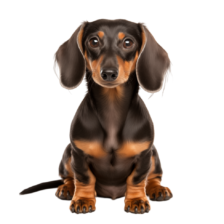

When I first brought a dachshund home, I expected a lap dog. By day three he was trotting from room to room behind me, nose down, looking for work to do.
That is the part people miss. These dogs were bred to hunt underground for hours, and that engine did not shrink just because the legs did.
I am Umar, and I have lived with dachshunds for years. This is how I work out their exercise in my house, how much they get at each age, and where I draw the line to protect their backs.
How Much a Day?
Most healthy adults in my experience settle well on 30 to 60 minutes a day. I split that across two walks plus a short game, rather than saving it all for one long march.
The AKC notes that exercise needs vary by breed, age, and health, and that a mix of activity types works better than one long session alone. The AKC guide to how much exercise a dog needs is a useful check before you change a routine.
Mental work counts toward the daily total, not just miles walked. Ten minutes of sniffing on a walk, a puzzle feeder, or a short scent game can settle a dachshund as well as another ten minutes of marching, and it puts less load on the spine.
Miniatures often tire a little sooner than standards, though mine have always had opinions about that. A small dog with a big personality will still try to outwalk you on a good scent.
The AKC breed page for dachshunds describes that same mix of small size and real stamina. It matches what I see at home: short legs, long shift.
Watch the dog in front of you, not just the clock. A dog who is restless at 9 pm, barking at nothing and chewing the rug edge, usually did not get enough during the day.
Daily Walks Come First
Two steady walks form the base of our routine, one in the morning and one in the evening. I keep the pace comfortable and the ground flat or gently rolling where I can.
I let him sniff. A dachshund reads a street the way I read the morning news, and ten minutes of serious sniffing tires him in a way plain marching never does.
We walk on a harness, not a collar alone. It spreads any pulling across his chest instead of his throat, which matters on the day he spots a cat across the road.
Play That Works
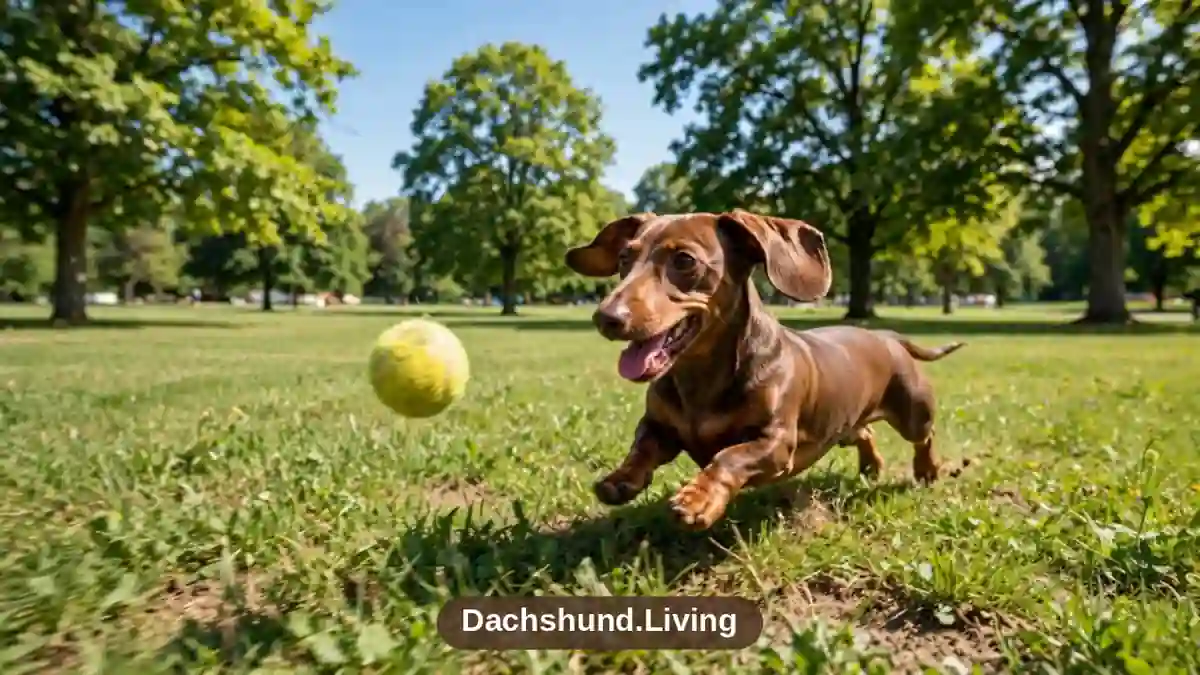
Short games burn energy fast in this house. Fetch on grass with low throws, a gentle game of tug with rules, and chase in a secure garden all get used through the week.
I keep each session to 10 to 15 minutes and stop while he is still keen. Pushing to exhaustion is where sloppy landings and sore legs start.
What I avoid is leaping. No jumping up to snatch a toy in mid air, and no games that end in hard skids on concrete, because every rough landing lands on that long spine.
Our picks for the best toys for dachshunds are the ones that survived this filter. If a toy only works when thrown high, it does not stay in the box.
Brain Games Count Too
A tired brain settles a dachshund almost as well as tired legs. On wet evenings, a snuffle mat or a puzzle feeder can buy me a calm hour on the couch.
We also hide treats around one room and send him hunting. It takes five minutes to set up, keeps him busy for fifteen, and taps straight into what he was bred to do.
Short training bursts count as exercise in my book. Ten minutes of practising a recall or a new trick leaves him ready for a nap, and it sharpens manners at the same time.
Make Brain Work Part of the Plan
Rotate two or three puzzle feeders through the week so the dog has to learn a new way to earn food each time. A snuffle mat on Monday, a treat ball on Wednesday, and a hidden treat hunt on Friday keeps the nose busy without adding miles to the legs.
Teach one new cue a week in five minute bursts, and practice it in a new room or a quiet corner of the garden. Our notes on how smart dachshunds are explain why this breed learns fast and gets bored faster when the work stays the same.
If your dog gets loud when he is bored, read our notes on why dachshunds bark a lot. Half the barking cases I hear about are really an exercise problem wearing a disguise.
Swimming, With Care
Swimming is the one hard workout that asks almost nothing of the joints or the back. The muscles do the work while the water carries the weight.
Not every dachshund agrees with me on this. I started mine in shallow, calm water with a fitted life vest, let him paddle back to the steps, and never pushed him further than he chose.
He is never near water unsupervised, not for a minute. After a swim he gets rinsed off and dried, ears included, before we head home.
Exercise by Age
Puppies: Little and Often
Puppy joints and growth plates are still forming, so I keep walks short and let play come in bursts through the day. If the puppy sits down mid walk, that is the walk telling me it was long enough.
There are no forced marches, no long runs, and no repeated stairs at this age. Short, flat and frequent beats one heroic outing every time.
Adults: The Full Routine
Healthy adults get the full pattern: two walks, some play or brain work, and rest in between. This is also the age where weight creeps on quietly if the routine slips for a few weeks.
Extra pounds load the spine with every step, so exercise and portions have to work together. Our guide on how much a dachshund should weigh shows the rib check I use every week or so.
Seniors: Short and Steady
Older dogs still need to move every day, just in smaller pieces. Two or three short, slow outings keep joints moving and weight steady without wearing him out.
I watch for lagging, stiffness after a nap, or a dog who suddenly does not want to start. Our page on senior dachshund care covers how I adjust the whole day around those signs.
For an older dog, aim for two or three walks of 10 to 15 minutes, with a slow start and a flat route. A short warm up walk to the end of the street, a pause to sniff, and a steady pace home beats one long outing that leaves the dog stiff the next morning.
Stiffness after rest, a slower start on cold mornings, or a dog that stops on a familiar route can point to joint pain. VCA explains arthritis in dogs, and a vet can help you adjust walks, weight, and rest around those signs.
What I Skip
Stair climbing sits at the top of my limit list. The odd step is life, but daily trips up and down a full flight ask a lot of a long back, so we use a gate and I carry him on the main stairs.
Our explainer on dachshunds going up and down stairs sets out where I landed on that rule. Ramps handle the couch and the car, and they get used without a fuss now.
Jumping on and off furniture is the other habit I worked hard to end. I also limit sports with sharp turns and sudden stops, however keen he looks at the start.
The VCA page on dachshunds explains the spinal risks behind these limits. Our own guide to dachshund IVDD and back problems lists the warning signs that mean a vet visit the same day.
Too Little or Too Much?
Too little shows up at home first. Weight creeping up, restless evenings, chewed skirting boards and attention seeking at midnight all point the same way in my house.
Too much shows up on the walk itself. Lagging behind, heavy panting that does not settle with a rest, soreness the next morning, or a dog who hides when the harness comes out.
When I see the second list, I cut the next two days back and let him recover. Puppies, seniors and dogs with a health issue reach that limit sooner than a fit adult, so their margins stay wider.
Signs You Have Gone Too Far
- Lagging behind on a route the dog normally enjoys
- Heavy panting that does not settle within ten minutes of rest
- Soreness, stiffness, or a limp the next morning
- A dog that hides or turns away when the harness comes out
If you see two signs together, cut the next two days back to short toilet walks and quiet indoor games. If limping lasts more than a day, or the dog refuses to move, check with your vet before you build the routine back up.
A Simple Day That Works
On a normal day here, the routine looks like this, and it has held up through busy work weeks.
- A 20 minute morning walk, with sniffing time built in
- A midday game, training burst or puzzle feeder for 10 to 15 minutes
- A 20 minute evening walk on a flat route
- A short sniff and toilet break before bed
On bad weather days I swap one walk for indoor games and training in the hallway. He accepts the trade happily as long as his nose and brain still get a job.
Heat and Weather Limits
Walk early in the morning or late in the evening on hot days, and test the pavement with the back of your hand for five seconds before you set off. Carry water, walk in shade where you can, and keep the pace slow when the air feels heavy.
Heavy panting, drooling, wobbling, or a dog that seeks shade and will not move are signs to stop, cool the dog, and call your vet. The ASPCA hot weather safety tips and the AKC guide to heatstroke in dogs both list the warning signs to watch for.
Our guides to dachshund heat safety in summer and dachshund winter care cover the seasonal swaps in more detail, from cooling mats to warm coats and shorter cold weather outings.
A steady routine beats a big weekend outing every time. Two short walks, one brain game, and a rest in between keeps weight, mood, and back health on track, while one long Sunday hike followed by four quiet days leaves a stiff dog and a restless evening.
Frequently Asked Questions
Can dachshunds go on long hikes?
Fit adults can manage moderate hikes on even ground if you build the distance up slowly. Skip steep scrambles and long stair sections, carry water, and plan a shorter route than you would for a bigger dog.
Is stair climbing bad for them?
Frequent stair climbing, especially going down, puts real strain on the spine. Limit it where you can, use ramps for furniture, and carry small dogs on long flights.
How do I exercise him in bad weather?
Move it indoors with hallway games, a snuffle mat, puzzle toys and short training bursts. Brain work tires a dachshund surprisingly well, and a rainy day is a good time to teach a new trick.
My dachshund is overweight. Where do I start?
Start with short, flat walks and add a few minutes each week, paired with measured meals. Slow progress protects joints while the weight comes off, and a vet check first is sensible if he is very heavy.
How much exercise does a puppy need?
Short walks and play in bursts through the day, with plenty of rest between. Let the puppy set the pace, and avoid long runs, jumping and repeated stairs while he is still growing.
How much exercise does a dachshund need?
Most healthy adults do well on 30 to 60 minutes a day, split across two walks plus a short game. Puppies need less, and an overweight dog should build up slowly after a vet check.
A tired dachshund is a settled dachshund. That has held true with every dog I have lived with. Get the daily minutes right, keep the games kind to his back, and evenings at home get easier for both of you.
A quick note to close. I am an owner sharing what works in my home, not a vet, and this article is not veterinary advice. If your dog is sore, overweight or reluctant to move, check with your own vet before building his exercise up.


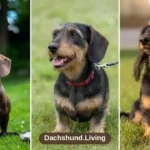
[…] high-impact jumping and rough stairs, though, since their long backs need protection. Our guide to Dachshund exercise needs has practical ideas that work for Dorgis […]
[…] near traffic. For daily walks, pair the harness with a standard 4 to 6 foot leash. Our guide to Dachshund exercise needs covers safe walking […]
[…] better than a collar. Keep walks positive and appropriately short for puppy legs; see our guide to Dachshund exercise needs for age-appropriate activity […]
[…] for mini Dachshunds for portion basics, and pair sensible feeding with regular activity from our Dachshund exercise guide. The VCA’s Dachshund breed page explains why weight control protects the […]
[…] of heavy balls. Play on grass rather than concrete, and keep throws low to protect the back. Our exercise guide covers back-safe play in […]
[…] some play before departures, plus a short training session to engage the brain. See our guide to Dachshund exercise needs for the right amount by […]
[…] trigger, lack of exercise and mental stimulation is usually the cause. Check that you are meeting a dachshund’s real exercise needs before you blame the temperament. A tired dachshund is almost always a quieter […]
[…] Daily walks at a sensible pace build that muscle without pounding the back, and our breakdown of dachshund exercise needs shows the right […]
[…] is one more reason a daily walk matters. I break down the right amount of activity in my post on dachshund exercise needs. Swimming, fun as it is, does nothing for nail length since there is no hard surface involved. If […]
[…] It burns energy and builds muscle tone without the pounding of pavement. If you are thinking about how much exercise dachshunds need, swimming can be a brilliant part of the mix, and plenty of dachshunds turn into enthusiastic […]
[…] backed dog. Use ramps for the car and sofa, skip the repeated stair races, and read my breakdown of dachshund exercise needs if you want the back safe logic in […]
[…] also stick close to the exercise guidance in dachshund exercise needs explained. About an hour a day, split into two walks, keeps my dog relaxed enough to rest while I am out […]
[…] and stop start by design, so he still needs his proper outings and play on top. Our breakdown of dachshund exercise needs covers how much that is at each […]
[…] breakdown of dachshund exercise needs has ideas by age. Gentle fetch and sniff walks beat repeated jumping off the couch, which jars the […]
[…] need more doing than their lap dog reputation suggests, so be honest about whether yours is getting the exercise a dachshund actually needs. Mine needs a good hour split across the day, with plenty of sniffing in […]
[…] breakdown of dachshund exercise needs explains why that split routine protects joints and backs. Puzzle feeders, scent games and short […]
[…] this mix. Skip repeated high jumps and rough stair climbs, and use the pacing ideas in my guide to dachshund exercise needs to build fitness without pounding […]
[…] has had proper exercise is less likely to race around the house looking for action. Our guide to dachshund exercise needs sets out the daily walks and sniff time that keep mine settled […]
[…] a day, on grass or flat paths where he sets the pace. That follows the thinking in my notes on dachshund exercise needs: little and often keeps muscle on, and muscle protects sore […]