
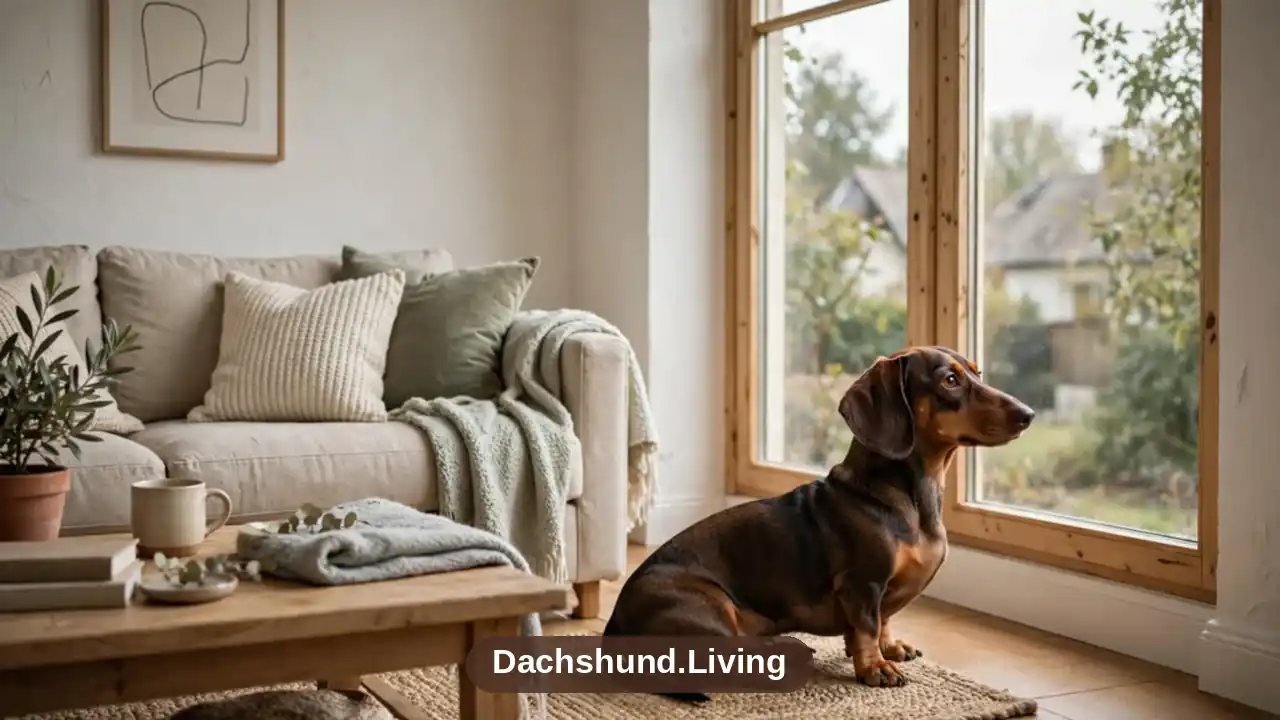

The first clue was not the barking. It was the door frame, chewed down to bare wood on the side I always left from.
My dachshund followed me from room to room all day, and the moment I stepped out he panicked. Keys in my hand were enough to start the pacing and whining.
I am Umar, and I have lived with dachshunds for years. This is the routine that finally taught my dog that being alone is boring, not frightening.
How I Knew It Was Anxiety
A bored dog gets into mischief at random times, including while you are home. An anxious dog falls apart specifically around leaving, and mine started within minutes of the door closing.
I set up my phone to record one workday and watched the footage that evening. He paced, drooled, barked at the door in bursts, then paced again, with barely a pause.
That timing is the giveaway. If the noise starts soon after you leave and centres on doors and windows, you are likely looking at anxiety, not naughtiness. Our guide on why dachshunds bark so much helped me separate alarm barking from panic barking.
Rule Out the Medical Side First
Before any training, he went to the vet. Pain, a urine infection or thyroid trouble can all look like anxiety, and no routine fixes a dog who is hurting.
VCA Hospitals’ guide to separation anxiety in dogs lists the medical problems worth ruling out first, and it matched what my vet checked. His results came back clear.
Desensitisation and counterconditioning: two different tools
Desensitisation means meeting the scary thing in such a small dose that it stops being scary, which is what the tiny steps in this routine do. Counterconditioning means pairing that small dose with something good, so the door closing starts to predict a stuffed food toy instead of panic. The AKC guide to separation anxiety in dogs describes both ideas, and they work best together, not as two separate plans.
Keep the dose small enough that your dog stays calm through the whole rep. If he is already pacing or whining, the step was too big, so drop back to the last calm step and build from there again.
That meant the problem was learned fear, and learned fear can be unlearned. That was the good news, and it shaped everything I did next.
Step One: Make the Leaving Cues Boring
Dogs read our routines better than we do. Shoes, coat, keys and bag all told my dog a departure was coming, so his stress started long before I actually left.
For two weeks I picked up my keys and then made tea. I put my coat on to watch television and carried my bag into rooms I never normally took it to.
By the end of the second week, the keys meant nothing again. That sounds trivial, but it removed the long build-up of dread before every real departure.
Step Two: Alone Time in Tiny Steps
This is the part that actually did the work. I started by stepping into the hallway and closing the door for five seconds, then walking back in without any fuss.
The ladder I followed looked like this:
- Ten seconds out of sight, several times a day, always coming back before he worried.
- One minute, then three, then five, mixed in random order so longer was not always harder.
- Out the front door and straight back in, then a walk to the end of the path.
- A short walk around the block, then a quick trip to the shop.
One rule mattered more than the numbers: never move up a step after a bad day. If he whined at three minutes, we stayed at two minutes for a few more days.
A setback is one bad day, not a failed plan. Stay at the last calm step for three or four more days after a wobble, then try the next step again on a quiet day when nothing else is changing in the house.
Jumping from five minutes to half an hour after one good day is the most common way to undo a week of progress, so keep the jumps small even when he looks ready. Our guide to how long a dachshund can be left alone sets realistic limits for the length you are building toward.
Progress was slow for the first fortnight and then oddly fast. Once he believed I always came back, each new step took less time than the one before.
The Routine on Real Leaving Days
Training sessions are one thing, but real departures need their own setup. He gets a proper walk first, with plenty of time to sniff, so his body and brain are both tired.
Aim for a walk with plenty of sniffing rather than a fast march around the block, since sniffing tires a dog out more than distance does. Twenty to thirty minutes of unhurried sniffing, plus a few minutes of simple training or a food puzzle, leaves most dachshunds ready to settle.
Skip exciting fetch or rough play right before you leave, since a wound-up dog finds it harder to calm down alone. Our breakdown of dachshund exercise needs shows how much daily activity this breed needs in total.
Back home, he gets a frozen stuffed food toy in his settle spot, and I leave while he is working on it. The toy only ever appears at departures, which keeps it special.
The Settle Spot
His spot is a gated corner with his bed, water and a worn jumper of mine. We built it up with meals and chews in there while I was home, so it never felt like exile.
Our notes on crate training a dachshund cover the same slow build if you prefer a crate. A supportive bed made for dachshunds turned his corner into somewhere he chose to rest, not just wait.
Crate or gated room: pick the one he already trusts
A crate only helps if your dog already walks into it calmly and settles there while you are home. If he panics in a crate, with bent bars, torn bedding, drool pooling on the floor, or sore paws from clawing, take the crate out of the plan and use a gated room instead.
A small dog-proofed room with his bed, water, and a chew gives him space to move without giving him the whole house to patrol. Our guide to dachshunds in apartments covers the same small-space setup for homes where a full room is not spare.
Coming Home Quietly
Arrivals taught him as much as departures did. I stopped the big hallway reunion and started walking in, putting my bag down, and greeting him once he had settled.
It felt rude for about a week. Then I noticed he had stopped launching himself at the door the moment he heard my key.
Small Extras That Helped
A worn jumper in his bed carried my smell, and he would drag it into a pile and sleep on it. It costs nothing and it clearly comforted him.
On days I had to be out longer than we had trained for, a neighbour popped in at midday during the early months. Bridging a gap honestly beat undoing a week of progress with one long panic.
I also checked the camera less as he improved. Watching him sleep through a whole afternoon did more for my guilt than for his training, but I will take both.
What Did Not Help
Telling him off for the chewed door frame did nothing except make him greet me nervously. He could not connect my anger with something he did hours earlier in a panic, and punishment after the fact can make an anxious dog more fearful of your return, not less. The ASPCA separation anxiety guide makes the same point, and it is worth reading before you add any correction to the routine.
A second dog was suggested more than once, and I nearly gave in. An anxious dog can teach a new one the same fears, so I fixed the anxiety first. The ASPCA’s separation anxiety guide makes the same point, and it is worth reading before you add a puppy to the mix.
If a puppy does join your home one day, our new dachshund puppy checklist covers that first week. Alone time training belongs in it from the very first day.
When It Is Beyond Home Training
Some dogs panic hard enough to hurt themselves, chewing doors, breaking teeth or clawing at crates. That level of distress is a vet conversation, not a training failure on your part.
A vet can rule out anything missed and talk about short term medication while training continues. For a dog who is truly stuck, a certified behaviourist can build a plan around your exact routine.
Asking for that help is not giving up. It is the same ladder, just with a professional holding the other end.
Frequently Asked Questions
How do I tell anxiety from boredom?
Anxiety starts with leaving. The behaviour begins soon after you go, centres on doors and windows, and rarely happens while you are home. Boredom mischief is random and happens in front of you too.
How long does desensitisation take?
Mild cases often shift within a few weeks of daily practice. My dog took about two months to manage a full workday calmly, and harder cases can take longer.
Should I crate my anxious dachshund?
Only if the crate itself relaxes him. Some dogs settle in a den, while others panic and injure themselves trying to get out. Film short test sessions before you trust it.
Does leaving the radio on help?
It helped mine a little, mostly as background company. Quiet talk radio or calm music is worth trying, but it supports the training rather than replacing it.
Will he just grow out of it?
Puppy clinginess often fades with age and training. True separation anxiety in an adult dog rarely fixes itself, and waiting usually lets the habit dig in deeper.
Calm is a skill, and like every skill it is built in small reps. Five quiet seconds became five minutes, then an hour, then a normal workday. Start smaller than you think you need to, and let your dog set the pace.
One last note from me. I am an owner sharing what worked in my house, not a trainer or a vet, and this is not professional advice. If your dog is injuring himself or nothing improves after a few steady weeks, please talk to your vet or a certified behaviourist.





[…] speeds housetraining and gives your puppy a safe retreat. If your pup fusses when left alone, our separation anxiety tips for Dachshunds can […]
[…] stuffed puzzle toy given at departure can turn the scariest part of the day into the best part. Our separation anxiety tips explain how to build that positive association. The AKC’s Dachshund breed overview describes […]
[…] If your dog guards the bed or sleeps poorly, a separate bed nearby is kinder to everyone. Our separation anxiety tips help if nights are […]
[…] are out and the neighbors report it, you are likely dealing with anxiety rather than alertness. Our separation anxiety tips cover building up alone time gradually and making departures less […]
[…] dachshunds soil when left alone because of stress, not defiance. If that pattern fits your dog, our guide to dachshund separation anxiety matters as much as the potty schedule […]
[…] the blanket is his coping tool. If yours is clingy, chews or barks when you head out, my notes on dachshund separation anxiety are worth a […]
[…] you recognise that picture, start with my dachshund separation anxiety tips and shorten absences while you work through them. If the panic is severe, or your dog is hurting […]