
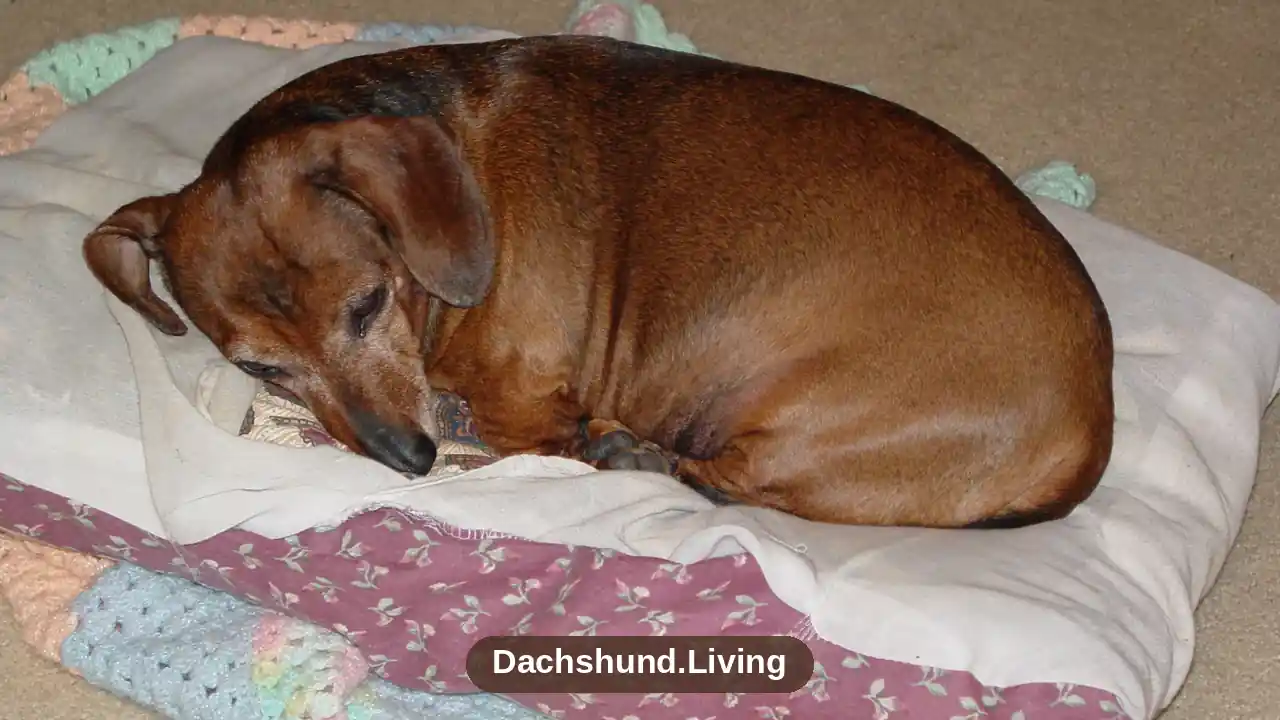

I get asked this more than almost anything else, usually by someone standing in my kitchen holding a new puppy. My honest answer is always the same: it depends on the age of the dog, and it is probably less time than you hoped.
I work. Most dachshund owners I know work. So this is not about guilt, it is about being straight about what a small, people loving dog can actually handle, and what you need to put in place when life runs longer than that.
The short answer by age
For a healthy adult dachshund who has been built up to it, four to six hours is a fair stretch. Eight hours is the absolute ceiling I would ever aim for, and only with a break in the middle. Puppies and seniors sit well below that.
| Age | Comfortable alone time | Why that limit |
|---|---|---|
| Puppy under 6 months | 1 to 3 hours | Tiny bladder, frequent feeding, still learning the house is safe |
| Adult 1 to 7 years | 4 to 6 hours, 8 at most with a midday break | Can hold on and settle, but still needs company, exercise and a toilet break |
| Senior 8 years and older | 2 to 4 hours | Stiffer joints, weaker bladder, more naps but also more worry when routines change |
Those numbers assume a dog who has eaten, been out to the toilet, and had some exercise first. A dog left straight from a crate, with no walk and a full bladder, will struggle in half that time.
Puppies need you close
When mine was ten weeks old, I timed it without meaning to. I popped out for 40 minutes and came home to a puddle, a chewed skirting board, and a puppy who had clearly cried the whole time.
That was not naughtiness. That was a baby dog who needed the toilet every hour or so and had no idea I was coming back.
A rough guide that worked for me was one hour for each month of age, up to about four hours. A three month old gets three hours at most, and even that needs a pen, water, a safe chew, and puppy pads you fully expect to be used.
That rule is a rough guide, not a vet rule, and small breeds often sit at the short end of it. A three month old dachshund may need the toilet every hour when awake, and a puppy who has just eaten, drunk or woken up needs it sooner still. The month rule tells you the maximum to aim for, not the time to expect.
If the pen is wet every time you return, the gap is too long for that puppy, whatever the rule says. My dachshund puppy training tips cover the pen and routine basics for those first weeks.
If you are in those first weeks, my new dachshund puppy checklist covers the pen and routine basics I wish I had set up on day one. Keep early absences tiny and boring, and come back before the crying starts whenever you can.
Adults can cope, with a routine
A settled adult is a different story. Mine is five now, and on a workday she does a morning walk at 7, breakfast, a snooze on the sofa, and she is fine until the lunchtime visit at 1.
What makes that work is the walk before I leave. A tired dachshund settles, a wired one redecorates. If your morning walk has turned into a pulling contest, fix that first with the basics in my guide to dachshund leash training to stop pulling, because a calm, sniffy walk tires the brain as much as the legs.
I also stick close to the exercise guidance in dachshund exercise needs explained. About an hour a day, split into two walks, keeps my dog relaxed enough to rest while I am out instead of pacing the hallway.
Seniors need shorter gaps again
This part caught me off guard with my previous dog. At eleven, he slept more, so I assumed he could wait longer. In reality he needed the garden more often, he got stiff if he lay in one spot too long, and he worried more when the house went quiet.
For a senior, I plan around two to four hours and I leave a washable pad down without making a fuss about it. I also leave a worn jumper in his bed. It sounds soft, I know, but on camera he would drag it closer and settle on it every single time.
What happens when you push it
Dachshunds tell you they have had enough, just not in words. The first signs I see are barking at the door or window, then accidents from a dog who is fully house trained the rest of the time. After that comes the chewing: door frames, shoes, the corner of a rug, anything that smells of you.
None of that is spite. A dog who chews the skirting board at hour seven was probably anxious at hour five and out of options by hour six. Punishing it when you walk in does nothing except make tomorrow worse.
House training can unravel fast too. I wrote about why dachshunds are hard to potty train, and long absences undo that hard work, because a puppy or adult who has to go indoors learns that indoors is allowed. Once that line blurs, you are retraining from scratch.
The ASPCA guide to separation anxiety lists the same pattern vets see every week: barking and howling, pacing, drooling, and house soiling in a dog who only does it when left. If that list sounds familiar, treat it as anxiety, not bad behaviour.
Anxiety, Boredom or a Full Bladder
Those signs can mean three different things, and the fix depends on which one it is. True separation anxiety shows up only when you leave: barking, pacing, drooling and house soiling in a dog who is fine when you are home.
Boredom looks similar but the dog settles with a chew or a walk, and a full bladder is just a toilet problem, not a behaviour problem. The VCA Hospitals guide to separation anxiety in dogs adds one more distinction owners miss: confinement anxiety, where the crate or the room itself is the problem, and a dog who panics when locked up may be calm with the run of a safe room.
How working owners make it work
I will be plain here: a full nine to five day with nobody calling in is too long for most dachshunds. Almost every working owner I know who makes this breed work uses some mix of help: a midday visit, a walker, staggered hours, or doggy daycare on the longest days.
Daycare covers the hours, but it does not train the anxiety out, so it sits alongside the gradual build up, not instead of it. Nobody I respect just leaves the dog for nine hours and hopes.
A midday break changes everything
A 20 minute lunchtime visit splits the day into two manageable halves. For two years I drove home at lunch, 12 minutes each way, let her out, refilled the water, and left again.
It was a pain in winter. It also completely stopped the afternoon barking my neighbour had politely mentioned.
If you cannot get home, a walker or a trusted neighbour doing that same 20 minutes does the same job. The AKC advice on having a dog while working a nine to five makes the same point: adult dogs cope for four to six hours, so a midday break is what makes a full workday fair.
Stagger the household if you can
For a while my partner left at 9:30 and I left at 7:30, and I got home first at 4. That simple stagger cut the alone stretch from nine hours to six and a half without paying anyone. If anyone in the house works shifts or starts late, build the dog plan around that overlap.
Frozen Kongs and a camera
The night before a workday I stuff two rubber toys with soaked kibble and a smear of peanut butter, then freeze them solid. Handed over as I pick up my keys, one buys about 30 quiet minutes while the dog settles. It does not fill a day, but it covers the hardest part, which is the first half hour after the door closes.
Rotate the toys, because the same two Kongs lose their magic by Thursday. Keep four or five in the freezer and swap them through the week, with different fillings so the dog has to work a little.
A snuffle mat or a lick mat does the same job on a different day, and both are cheaper than a chewed door frame. My roundup of the best toys for dachshunds covers which types survive a determined dachshund and which ones fall apart in a day.
A cheap indoor camera was the best money I spent. It told me the truth: my dog cried for six minutes, then slept for three hours. Without it I would have guessed, worried all day, and probably changed a routine that was actually working.
For severe cases, training alone sometimes is not enough, and that is not a failure. The VCA Hospitals guide to separation anxiety in dogs notes that new medications for separation anxiety have been approved, and your vet can discuss whether medication suits your dog.
Medicine does not replace the training, it lowers the panic far enough for the training to work. If your dog hurts himself trying to escape, or panics the moment you pick up your keys, that conversation is worth having sooner rather than later.
Building up alone time gradually
Whatever age you start at, build the time up in small steps. I began by stepping into the garden for two minutes, then five, then a trip to the corner shop. Keys picked up and put down again, coat on and off, no big goodbyes and no big hellos.
Add about 10 to 15 minutes every few days if the camera shows a settled dog. If you see pacing or crying, drop back to the last length that worked and stay there a while longer. Rushing this stage is the mistake I see most, and I made it myself.
A crate or pen helps some dogs feel contained and safe, as long as it was introduced properly and never used as a punishment. My step by step routine is in crate training a dachshund, and I would follow that before ever closing a crate door and leaving for an hour.
Signs your dog is not coping
Watch for barking or howling that neighbours hear but you never do. That is exactly why the camera matters. Also watch for drooling on the door mat, scratched paint by the handle, or a dog who will not eat a treat left for them but wolfs it down the second you return.
Changes at home time matter too. Frantic, over the top greetings after even a short absence, following you from room to room all evening, and broken sleep are all signs the alone time is costing your dog more than it shows.
One bad day proves nothing. The same signs three days a week mean the plan needs changing.
If you recognise that picture, start with my dachshund separation anxiety tips and shorten absences while you work through them. If the panic is severe, or your dog is hurting itself trying to get out, talk to your vet rather than pushing through. I am an owner, not a vet, and some cases need proper medical help alongside the training.
Frequently Asked Questions
Can I leave my dachshund alone for 8 hours?
Only a settled adult, and only with a midday toilet break and walk built in. A straight eight hours with no break is too long for most dachshunds, and puppies and seniors should never be left that long.
Can a dachshund puppy be left alone while I work?
Not for a full workday. A puppy under six months needs letting out every one to three hours, so you will need leave, a sitter, or a family member calling in through the day until the puppy is older.
Will getting a second dog solve it?
Sometimes it helps a bored dog, but it does not fix true separation anxiety, which is about you leaving, not about being the only dog. It can also leave you with two anxious dogs, so solve the first dog anxiety before adding a second.
Should I leave the TV or radio on?
It does no harm and it seems to take the edge off the silence in my house. I leave a talk radio station on low, mostly because sudden outdoor noises stand out less against it. It is a comfort extra, not a substitute for a break.
Is it cruel to leave a dachshund alone at all?
No, as long as the length matches the dog age and the dog has been built up to it gradually. Most healthy adults rest happily for a few hours with a walk before and after. What is unfair is long, unbroken stretches every day with no help arranged.