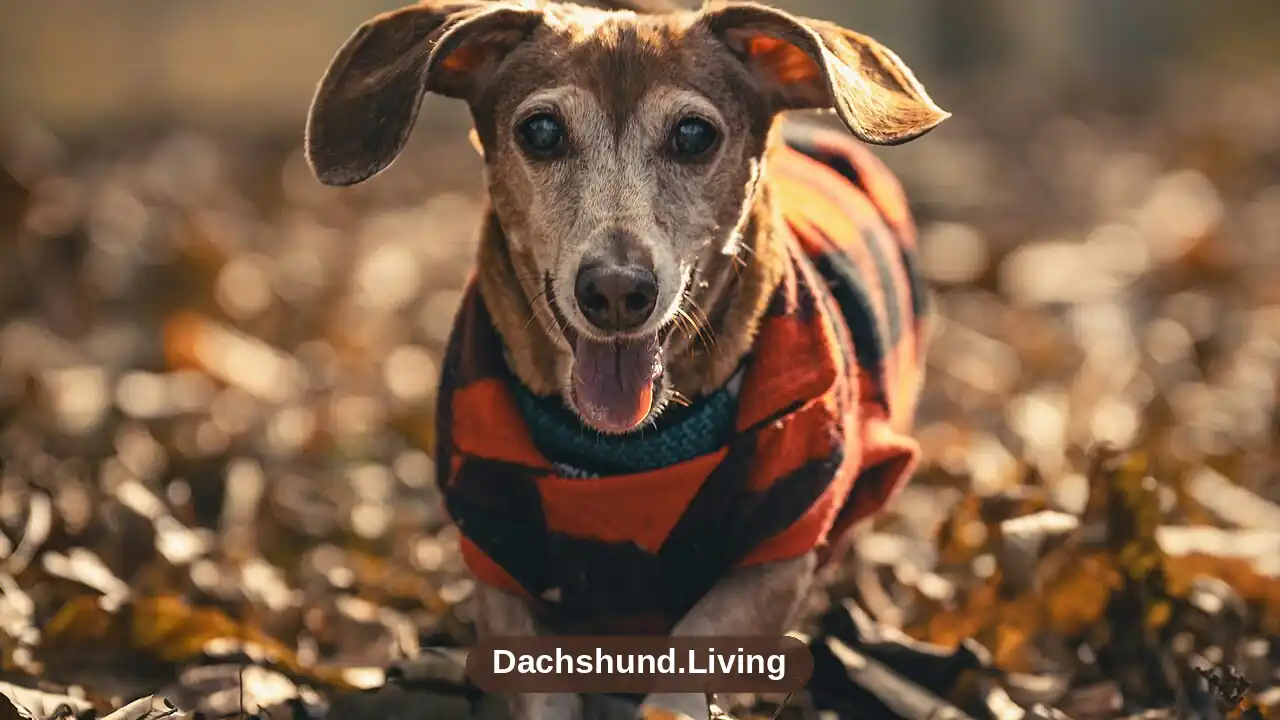

The grey arrived on my old boy muzzle almost overnight. One winter he raced me to the kitchen at the kibble tin, the next he arrived seconds later, stiff from his nap, still keen but clearly older.
I am Umar, a lifelong dachshund owner, not a vet. I changed his food in small steps from about age eight, and the difference showed in his waist, his coat, and how easily he got up in the morning.
This is what I learned: what to look for on the bag, how much to put in the bowl, and how to switch foods without a week of loose stools on the kitchen floor.
When a Dachshund Counts as Senior
Most dachshunds count as senior at about 7 to 8 years old. Small dogs often live well into their teens, so this is not the end of the story. It is where yearly checks become twice yearly in our house, and food stops being on autopilot.
Signs crept in one by one: longer naps, a slower first walk, white hairs, and teeth that no longer crunched kibble with the old enthusiasm. My wider notes are in my senior dachshund care guide.
Age alone does not pick the food. Weight, blood work, teeth, and joints matter more than a birthday, a point PetMD makes in its guide to feeding a senior dog: choose for the dog in front of you.
A Slower Engine, the Same Appetite
An older dachshund burns fewer calories. Walks shorten, naps lengthen, and muscle gives way to fat if the bowl stays the same size. Mine gained almost a kilo in one year on food he ate happily at age five.
That weight is no small thing on a long back and short legs. It sits on joints and spine, and shifting it later is harder than preventing it. I weigh him monthly on the bathroom scales, me holding him, then me alone.
If you are unsure what your dog should weigh, see my guide to how much a dachshund should weigh. Feel for ribs under thin fat and look for a waist from above. If both have vanished, portions need a quiet trim, not a crash diet.
The Low Protein Idea Is Mostly a Myth
For years, senior foods were made with less protein, based on the idea that protein strains old kidneys. For a healthy older dog, that has not held up. Older dogs lose muscle, and good protein helps them hold on to it.
My vet put it plainly at our last visit: quality protein matters more than a low protein number for a healthy senior dog. I look for a clearly named meat or fish first on the list, like chicken, salmon, or lamb, and a food my dog can digest without gas or loose stools.
Researchers at the Cummings School at Tufts found foods sold as senior varied wildly in protein, calories, and sodium, because there is no set recipe for that word. Their work, covered in this Tufts report on senior dog foods, is why I read the back of the bag.
The most useful line on the bag is not the word senior on the front. It is the nutritional adequacy statement, usually near the ingredients, which says the food is complete and balanced for a life stage, such as adult maintenance or all life stages. That statement means the recipe meets a recognised nutrient profile, while senior on its own has no fixed legal meaning. If a food has no such statement, or the statement is for a different life stage, ask your vet before feeding it long term.
The exception is diagnosed kidney disease. That dog may need controlled protein and phosphorus, on a vet led prescription diet. Never cut protein for a healthy dog just because he turned eight.
Kidneys, Heart and Quiet Watchfulness
Kidney and heart problems grow more common with age, and food helps manage both. For kidneys, vets watch phosphorus and hydration. For hearts, sodium is the number they ask about first, and senior bags differ hugely in how much they contain.
I do not treat either condition from the pet shop shelf. I keep up blood tests, keep fresh water in two places, and take any change in thirst, appetite, or coughing to the vet. Food changes follow test results here, never guesswork.
Two label numbers deserve a closer look once blood work is in. Phosphorus matters for kidneys, and foods made for kidney support are usually lower in phosphorus, while sodium matters for hearts, and the amount can vary a lot between senior bags. Neither number tells you to change food on your own, and a prescription diet is a vet decision, not a shelf choice. What the numbers do is give you a useful question to take to the appointment: is this food still right for my dog’s latest blood results?
Ingredients That Earn Their Place
Help for Stiff Joints
Glucosamine and chondroitin are the two names I look for. They support the cartilage that cushions joints, and joints take a daily beating in a breed that climbs ramps on short legs. Levels in food are modest, so we treat them as support, not a cure.
Omega 3 From Fish
Omega 3 fats, named EPA and DHA on labels, usually come from fish oil or salmon. They are linked with joint comfort, skin, coat, and brain health in older dogs. Named fish or fish oil in the list gives me more confidence than a vague claim about healthy oils.
Fibre for an Older Gut
Sensible fibre keeps an older gut moving. It helps regular stools and helps a dog on smaller portions still feel full. Beet pulp, pumpkin, and chicory root show up often, and my dog handles all three well.
Teeth decide how much of that food actually gets eaten. A senior dachshund with worn teeth or missing back teeth may leave hard kibble half chewed, so a smaller kibble, a softened bowl, or a wet food mix can keep his intake steady. If he drops food, chews on one side only, or takes much longer over a meal he used to finish quickly, the mouth needs a vet look before the food gets blamed. My guide to dachshund dental care covers the checks that catch sore teeth early, and a sore mouth left alone will undo the best feeding plan.
Wet, Dry or a Bit of Both?
Dry food is easy to measure, keeps well, and the crunch gives teeth some work. Wet food smells stronger to an old nose, brings extra water, and is kinder to a mouth with worn or missing teeth. Neither wins alone in our house.
What works for us is a mix. About two thirds measured kibble, softened with warm water for five minutes, and a spoon or two of wet food stirred through for smell. On days after dental work, we went fully wet for a week, then eased back.
Watch calories when you mix. Wet food looks light but some tins are rich, and kibble is dense in a small scoop. I weigh the dry part, because my eye with a cup was generous by about a fifth, every time.
For smaller mouths, my notes on dog food for a mini dachshund cover kibble size and basics. The video below walks through feeding changes at ages 7, 10, and 13, and matches our experience closely.
How Much to Feed Each Day
These amounts suit a typical senior kibble at about 340 to 360 calories per cup, split into two meals. They are starting points only. A lazy house dog needs the low end, an active one needs more, and your vet call on body condition settles it.
| Dog weight | Dry food per day | In grams | Note |
|---|---|---|---|
| About 5 kg | About 3/4 cup | About 75 to 85 g | Typical mini, watch treats closely |
| About 7 kg | About 1 cup | About 95 to 105 g | Our current size and amount |
| About 9 kg | About 1 and 1/4 cups | About 115 to 125 g | Check the waist every month |
| About 11 kg | About 1 and 1/2 cups | About 135 to 150 g | Large standard, adjust for activity |
Weigh the food, feed twice a day, and review monthly. If ribs get hard to feel, trim about a tenth for two weeks and check again. Slow changes suit old stomachs and old habits alike.
Vets score body condition on a nine point scale, and most healthy dogs should sit around 4 or 5, with ribs felt under a thin cover of fat and a waist visible from above and from the side. That score is more useful than the bathroom scales alone, because muscle loss can hide under a steady weight in an older dog. If the score creeps up, my plan in overweight dachshund weight loss plan walks through a slow, vet checked trim, and if it creeps down without a reason, that also earns a vet visit, because unplanned weight loss in a senior is never just old age.
Switching Foods Without the Upset
A sudden swap is the fastest way to a miserable night. I switch over 7 to 10 days, and I go slower if stools soften at any step. The pattern is simple, and boring is good here.
- Days 1 to 3: about three quarters old food, one quarter new food.
- Days 4 to 6: half old food, half new food in each bowl.
- Days 7 to 9: about one quarter old food, three quarters new food.
- Day 10: all new food, if stools and appetite have stayed steady.
If loose stools appear, stay on the last good mix for two extra days before moving on. If there is vomiting, blood, or a dog who stops eating, stop the switch and call the vet. Pride has no place in a feeding plan.
Treats and the Calorie Trap
Treats are where senior diets quietly fall apart. One biscuit for a 7 kg dog is like a whole snack bar for us, and kind visitors add up fast. I keep treats under a tenth of his daily calories, mostly from his measured food, not on top of it.
Soft treats suit old teeth better than hard biscuits. Carrot pieces, green beans, and a few blueberries go down well here, in tiny amounts. My fuller list is in my guide to the best treats for dachshunds, and the house rule is simple: if it was not planned, it still counts.
Food and joints are linked in a way that matters for this breed. Extra weight loads every sore joint, and fat tissue also feeds the low level inflammation that keeps arthritic joints sore, so the feeding plan here is also a joint plan. If your senior is already stiff in the mornings, read my notes on arthritis in older dachshunds alongside this post, because the weight, exercise, and home changes there work together with the bowl, not instead of it.
What Supper Looks Like at Our House
My boy, at about 7 kg, gets roughly 100 g of senior kibble a day, split into two meals, softened with warm water, with a spoon of wet food on top. A fish oil measure from our vet goes on the morning bowl. Water is changed twice a day.
He eats from a low, heavy bowl that does not slide. Meals happen after walks, and the bowl comes up after twenty minutes. Routine comforts an old dog, and honestly, me too.
A quick honesty note. This is owner experience from feeding my own dachshunds, not veterinary advice. Every senior dog deserves a plan shaped by his own vet and blood work, and no blog post can stand in for that.
Frequently Asked Questions
At what age should a dachshund start senior food?
Most owners start thinking about it at about 7 to 8 years old. The right moment depends more on weight, teeth, joints, and blood results than on age alone. Ask at a routine vet visit, and change slowly when you do.
Do senior dachshunds need less protein?
A healthy senior dog usually does not need less protein, and may need good protein to hold on to muscle. The low protein idea came from kidney care for sick dogs. A dog with diagnosed kidney disease is different, and his diet should be set by a vet.
Is wet or dry food better for an older dachshund?
Both can work well, and many owners feed a mix. Wet food helps hydration and sore mouths, while dry food is easy to measure and store. Choose what your dog chews comfortably, and keep an eye on total calories either way.
How do I switch my senior dog to a new food?
Mix the new food in slowly over 7 to 10 days, raising its share every few days. Pause at the last good step if stools soften. A slow switch protects an older stomach far better than a brave overnight change.
Why is my senior dachshund gaining weight on the same food?
Older dogs move less and burn fewer calories, so the same bowl slowly becomes too much. Weigh your dog monthly, weigh the food too, and count treats honestly. If weight keeps rising, ask your vet to check body condition and rule out other causes.