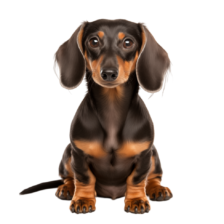


The scale at the vet said 24 pounds, and the nurse said it kindly, like it was not a verdict. My standard dachshund should sit closer to 19 or 20, so those extra pounds were not a rounding error.
I had told myself he was just big framed and winter fluffy. Standing there watching him pant on the table, I knew I had been feeding the dog I wished I had, not the one standing in front of me.
I am Umar, and I have lived with dachshunds for years. I am not a vet, so what follows is the plan I built with mine, in plain owner language, for any dog who has quietly got round.
Why a Long Back Cannot Carry Extra Weight
Think of a dachshund as a bridge. The spine is long, the legs holding it up are short, and every extra pound hangs off the middle of that span, pulling down all day long.
That load presses on the discs between the bones of the back. Dachshunds are already the breed vets name first for disc trouble, and fat makes each jump off the sofa and each tumble down the stairs a harder landing.
I go into the disc side properly in my guide to dachshund IVDD and back problems. The short version is that keeping this breed lean is not about looks, it is about taking strain off a back that was never built to carry spare weight.
The line between overweight and obese is not a feeling, it is a number. The VCA Hospitals guide to obesity in dogs defines overweight as 10 to 20 percent above ideal body weight, and obese as more than 20 percent above it, so a 24 pound dog whose ideal is 19 is more than 20 percent over, which puts him in the obese band, and that is exactly where my boy was. The same guide reports that a 2022 survey found 59 percent of dogs overweight, which means this is a common problem, not a personal failure, and it also notes that obesity can shorten a dog’s life.
Score the Body Before You Trust the Scale
Scales alone mislead, because two dachshunds at 20 pounds can be built very differently. Vets use body condition scoring instead, and the home version takes about a minute once you know the three checks.
The Rib Check
Run flat hands along the ribs, just behind the front legs, with light pressure. At a healthy weight you feel each rib easily under a thin layer of fat, a bit like feeling your own knuckles through a shirt pocket.
If you have to press hard to find a rib, there is too much padding. If you cannot find them at all, that dog needs a vet guided plan.
The Waist From Above and the Side
Stand over your dog and look straight down. A fit dachshund narrows behind the ribs before widening again at the hips, while an overweight one runs straight back like a sausage with legs.
Then kneel and look from the side. The belly should tuck up behind the ribcage toward the back legs, not run level, and never hang lower than the chest.
The full chart runs from 1 to 9, but at home I keep it in three bands. Scores 1 to 3 mean under, 4 to 5 mean ideal, and 6 to 9 mean over, with each step up meaning more fat over those ribs. The VCA Hospitals guide to body condition scores shows the hand positions and both views clearly, and it is the chart my vet uses.
My boy scored a clear 7 that day, which is vet speak for properly overweight rather than just sturdy. His healthy range, for comparison, is in my notes on how much a dachshund should weigh, and the score mattered more to me than the number.
A Starting Point for Calories
Once you know the score, you need a daily calorie number to aim at. The table below gives common starting ranges for gentle loss, worked out from a sensible target weight rather than the weight the dog carries today.
Treat every number in it as a first guess, nothing more. Your dog still needs his own target confirmed by your vet, because age, neutering, thyroid health, activity, and the actual food in the bowl all shift the right amount up or down.
| Current weight | Starting calories per day | First target to aim for |
|---|---|---|
| 8 lb | About 140 to 170 | Around 7 lb, then rescore the ribs and waist |
| 12 lb | About 200 to 230 | Around 10 to 11 lb |
| 16 lb | About 250 to 280 | Around 14 lb |
| 20 lb | About 300 to 340 | Around 17 to 18 lb |
| 24 lb | About 350 to 390 | Around 20 to 21 lb |
| 28 lb | About 400 to 440 | Around 24 lb, with vet weigh ins on the way |
Split the daily amount into two meals, morning and evening. A dog who gets half his food at breakfast is far less likely to spend the whole afternoon following you around the kitchen, working the sad eyes.
Check the calories on your food bag before you measure anything. Two kibbles that look alike can differ by a third in calories.
Calorie density is the trap here, because two foods can look identical in the bowl and differ by a third in energy. If you simply feed less of a rich food, the portion can get so small that protein and nutrients run short, which is why vets sometimes suggest a food made for weight loss instead of a smaller scoop of the usual one. My notes on dog food for a mini dachshund cover how to read the calorie figure on the bag and what to compare before you switch.
Weigh the Food and Retire the Scoop
My scoop was the quiet villain of this story. Filled level one day and heaped the next, it swung his breakfast by a third either way without me ever noticing.
A cheap kitchen scale fixed that within a week. Kibble now goes on the scale in grams at every meal, and the same amount lands in the bowl whether I am wide awake or half asleep.
Tell everyone in the house the new amount, and write it on the food bin in marker. One secret top up from a soft hearted visitor can quietly erase a week of careful measuring.
Treats Stay, But They Shrink
I did not ban treats, because training, recall practice, and plain bribery are half of life with this breed. I capped them instead, at around 10 percent of the daily calories, counted inside the total rather than added on top.
Dog biscuits mostly retired. In their place came green beans, small carrot pieces, and a few bits of his own measured kibble handed over like treasure, which to him they genuinely were.
My guide to the best treats for dachshunds lists the low calorie swaps that worked in our house. The PetMD guide to obesity in dogs backs the same approach, naming treats and table scraps as the usual hidden calories behind a dog who gains on normal meals.
If you need proof that slow and steady works, watch the video below. It follows Obie, a dachshund who arrived at a staggering 77 pounds, and shows what measured portions and patience did for him over the months that followed.
Exercise That Spares the Back
More movement matters, but the wrong kind can hurt the very back you are trying to protect. For a heavy dachshund I add frequency, not distance or speed: one extra short walk a day, and no more than five extra minutes a week, watching the next morning for stiffness before I add more.
Three or four short flat walks beat one long march. Sniff walks count fully, because a dog reading every fence post is moving, turning, and using his brain, all at a pace his joints and spine can handle.
Extra weight loads the joints as well as the spine, so watch how your dog moves the morning after a longer walk. Stiffness that eases after a few minutes is common, but a dog who is slow to rise, bunny hops, or refuses stairs may be telling you his joints are struggling. My guide to arthritis in older dachshunds covers the early signs, and if you see them, ask your vet before adding distance, because a sore joint needs a plan, not just more walking.
At home we play find the treat with a kibble piece hidden in a rolled towel, and scatter a few pieces in the grass to hunt for. What I never use as exercise is extra stair climbing or repeated jumping on and off the sofa, and my guide to dachshund exercise needs covers the daily amounts I aim for.
Slow Is the Whole Point
Safe loss for a dog this size is about 1 to 2 percent of body weight per week at most. For a 20 pound dog that is roughly a quarter of a pound a week, which feels like nothing until you add up a whole season of it.
So think in months, not weeks. Our first 2 pounds took the best part of three months, including a flat fortnight in the middle where the scale refused to move and I refused to panic.
Weigh in monthly, on the same scale and at the same time of day, ideally at the vet where it is free and accurate. Write every number down, because a written line of weights stops one odd reading from ruining your week.
When the Weight Will Not Move
If four to six honest weeks pass with weighed food and no loss at all, something else is going on. Hidden feeding is the first suspect, so check the bins, the treat jars, and every soft hearted person in the house.
If the food really is measured and the walks are happening, it is vet time. An underactive thyroid is a classic reason a dog gains on normal portions, and a blood test and proper workup can find it, along with other causes that no diet alone will fix.
Neutering is another quiet cause worth knowing about. It lowers a dog’s calorie needs while his appetite often stays the same, so a dog neutered after years on the same portions can drift up a pound a year without any change in the bowl. If your dog gained after neutering, the fix is usually a new measured amount rather than a mystery, and your vet can confirm the target.
Do not just keep cutting the food on your own. A dog cut too low for too long can lose muscle along with fat, and that trade helps nobody, least of all a long back that needs strong muscle to hold it up.
Frequently Asked Questions
How fast should an overweight dachshund lose weight?
About 1 to 2 percent of body weight per week at most, which for most dachshunds means a few ounces a week. Expect a real change over months, and judge progress at monthly weigh ins rather than day to day.
How do I know if my dachshund is overweight?
Feel the ribs, look for a waist from above, and check the belly tuck from the side. If the ribs hide under thick fat and the waist has gone, he is carrying too much, whatever the scale says.
Can I just feed less of the same food?
Often, yes, as a starting point, as long as the cut is modest and the food is weighed rather than scooped. If the amount gets very small, ask your vet about a weight control food so he still gets the protein and nutrients he needs.
Are green beans safe treats for a dieting dachshund?
Yes. Plain green beans and small carrot pieces are the swaps I use most, served raw, steamed, or frozen with nothing added. Keep all treats together near 10 percent of daily calories, so the swap actually saves something.
Should an overweight dachshund climb stairs for exercise?
No. Stairs load the spine and ask for a small jump at every step, which is the opposite of back friendly exercise. Flat walks, sniffing time, and gentle indoor games burn calories far more safely for this breed.
Here is where I hand you back to the professional, happily. Use this plan to understand the shape of the job, then sit with your own vet and build the actual calorie target, the food, and the weigh in schedule for your dog, because that number belongs to his body, his age, and his blood work, not to a table on the internet, mine included.