
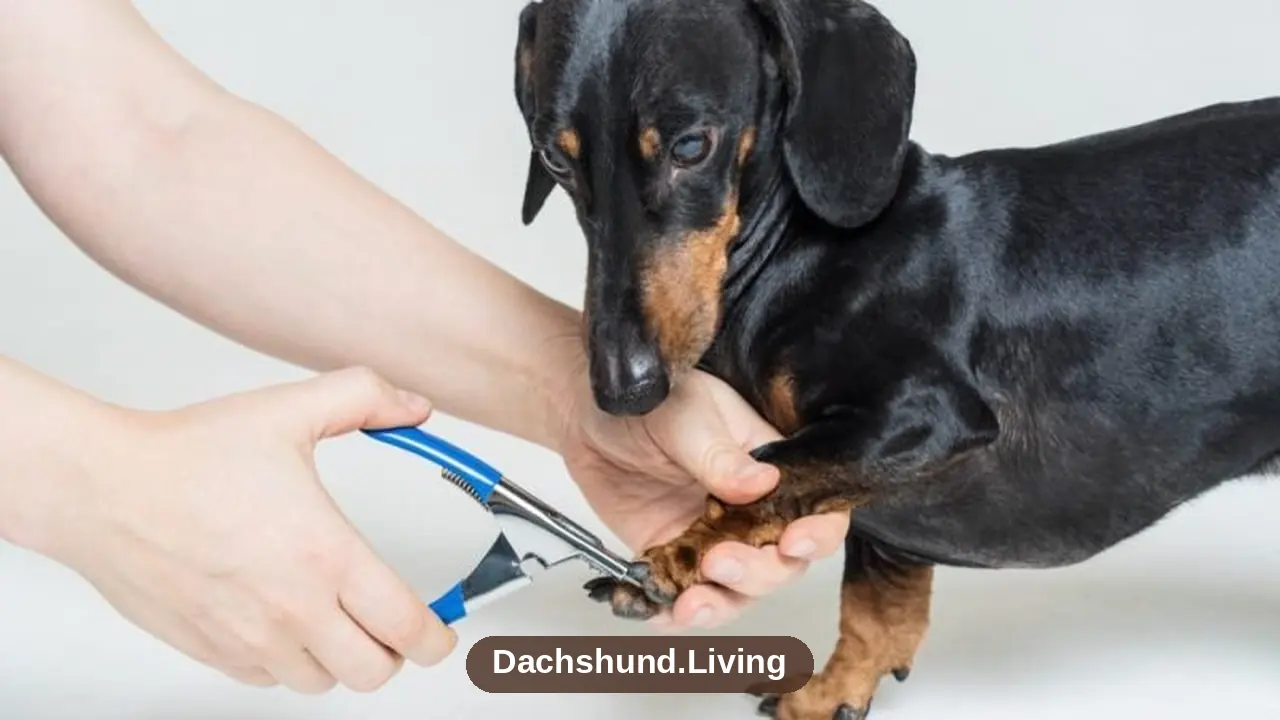

Nail day used to fill me with dread. Tiny nails, a wriggling dog, and that one awful thought in the back of my mind: what if I cut too much? If that sounds familiar, you are in good company, because almost every dachshund owner I know feels the same at first.
It does get easier, I promise. These days I can get through all four paws in a few calm minutes, usually with my dachshund half asleep. This is everything that helped us get there, written the way I wish someone had explained it to me.
Why Short Nails Matter So Much
A nail that is too long touches the floor before the pad does. The toes spread, the foot sits at the wrong angle, and the dog starts shifting weight backwards to cope. Run that posture for months and the legs, joints, and back all pay for it.
For a dachshund that trade off is worse than it sounds, because the spine is already the breed’s weak point. Long nails also catch on rugs and bedding, and a nail that tears is sore, bloody, and a miserable fix. If you want the bigger picture, I wrote about dachshund back problems and IVDD in detail, and nail length is one of those small habits that quietly adds up.
How Often Is Often Enough?
For most dachshunds, every three to four weeks works well. Dogs who walk on pavements every day wear their nails down as they go and may stretch a little longer between trims. Indoor dogs and older, slower dogs usually need them done more often, not less.
The simplest test is your ears. Stand your dog on a hard floor and listen. If you can hear clicking, the nails are already too long and it is trim time.
Daily walks on hard ground really are the best free nail file there is, which is one more reason to keep them up.
I set out sensible amounts in my guide to dachshund exercise needs. Swimming does nothing for nails, sadly. If your dog is a swimmer, read my notes on whether dachshunds can swim safely before the next trip.
What to Gather Before You Start
Get everything ready before the dog joins you. Leaving halfway through to hunt for treats or powder breaks the calm you have worked to build.
- Small scissor style clippers made for little dogs. They cut cleanly and give you far more control than big, heavy ones.
- Styptic powder. Non negotiable in my house. It stops a bleeding nail fast, and just knowing it is there steadies your hands.
- A small file or a grinder, if you like to smooth the edges afterwards.
- Really good treats. Cheese or little bits of chicken hold attention far better than a dry biscuit.
- Good light. Sit by a window or under a bright lamp, because you cannot trim what you cannot see, especially on black nails.
Guillotine style clippers work too, if that is what you have. Whatever you pick, keep the blades sharp. A blunt clipper crushes the nail instead of cutting it, and that pinch is what most dogs are actually objecting to.
Get the Dog on Board First
If your dachshund has never had a trim, do not open with the clippers. Spend a few days on groundwork instead.
Touch a paw, give a treat, let go. Hold a toe gently for a second, treat, let go.
Then bring the tool into it without cutting anything. Let him sniff the clippers, touch them lightly to a nail, treat again.
Open and close them near the paw so the click becomes dull background noise. It feels slow, but this is the part that makes the actual trim easy.
Puppies take to this fastest, so start in the first week your puppy comes home. My dachshund puppy training tips cover how paw handling fits into the early routine.
An older rescue can learn it too. Mine did, it just took a couple of weeks of short, boring sessions.
Trimming, Paw by Paw
Settle your dog somewhere he feels secure. I use a non slip mat on the floor with him tucked between my knees, others prefer a table.
Keep your voice flat and dull. Calm is contagious, and so is tension.
When you are unsure, take off less. You can trim again next week. You cannot stick nail back on, and one greedy cut can undo weeks of trust.
- Lift one paw and spread the toes gently so each nail is clear. Push any long hair out of the way first.
- Hold the toe between thumb and finger, thumb on the pad. A gentle squeeze pushes the nail out a touch and keeps it steady.
- Cut at roughly a 45 degree angle, following the curve of the nail, so the cut edge sits about level with the floor.
- On pale nails, look for the pink quick running inside and stop 2 to 3 millimetres short of it. If in doubt, take the hooked tip only.
- On dark nails, shave off thin slices and check the cut face after each one. More on this below, because it deserves its own section.
- Remember the dewclaws, high on the inside of the front legs. They never touch the ground, so nothing wears them down.
- Treat after every paw, not just at the end. Four small celebrations beat one big one.
- If he pulls away hard, stop, breathe, and try once more. If he pulls away again, call it a day and finish tomorrow.
Stand him up when you finish and look from the side. The nails should just clear the floor, with no clicking when he walks across a hard surface. The AKC sets out this same method in its guide to trimming your dog’s nails safely, which is worth a read if you like a second opinion before your first go.
Dark Nails and the Quick
Plenty of dachshunds have black nails, and black nails hide the quick completely. This is the bit that frightens people, including me at the start. The slice and look method takes the guesswork out of it.
Take a thin slice, then look at the face you just cut. Dry, pale, flaky looking nail is dead material and safe to keep removing.
As you near the quick, a darker, slightly waxy dot shows up in the centre of the cut face. That dot is your stop sign. Go no further on that nail.
Clippers or a Grinder?
Honestly, both work. Clippers are quick, quiet, and cheap, which matters when your patient has sixteen nails and limited patience. A grinder files the nail down bit by bit and leaves a smooth, rounded edge with no sharp corners.
The grinder’s downsides are noise, vibration, and time. Nervous dogs often hate the buzzing against the toe at first, so introduce it in stages: sound from across the room, then a brief touch, then grinding. My own routine is clippers for the cut and a few seconds with a file to take the sharp edge off.
If You Nick the Quick
Sooner or later it happens, to owners and to professional groomers alike. The nail bleeds, the dog yelps, and you feel awful. Your job in that moment is to be boring about it, because your dog takes his cue from you.
Press a pinch of styptic powder firmly onto the tip of the nail and hold it there for a few seconds. The bleeding normally stops quickly. Then treat, pause, and either carry on gently or finish another day.
No styptic powder in the house? Cornstarch or plain flour pressed onto the nail can help while you get some, which is the same backup VCA Hospitals suggests in its veterinary guide on how to trim a dog’s nails.
If the bleeding has not stopped after ten minutes or so of gentle pressure, or the nail looks torn rather than nicked, that is a job for your vet. One bad experience does not wreck your training, by the way.
When a Professional Is the Better Call
There is no prize for doing this yourself. If your dachshund panics, screams, or tries to bite, wrestling him through it can lock the fear in for good. A groomer or vet nurse will often have all four paws done in a couple of minutes.
Many clinics offer cheap, quick nail appointments, and watching a nurse do it teaches you a lot. Keep up the paw handling games at home in the meantime, and try again yourself when he is calmer. Nail care also slots neatly into a full groom, and if yours has a wire coat, my guide to grooming a wire haired dachshund covers the rest of that routine.
A quick word from me before the questions, since I am an owner and not a vet or a groomer. If a nail is cracked, curling into the pad, swollen at the base, or your dog is limping, skip the home trim and check with your own vet or groomer first.
Normal nails are a home job. Anything that looks sore is not.
Frequently Asked Questions
How short should the nails be?
Short enough to just clear the floor when your dog stands on a hard surface. On pale nails, stop 2 to 3 millimetres before the pink quick. On dark nails, stop when the darker dot appears in the centre of the cut face.
What if he will not sit still?
Go back to groundwork for a week: paws touched, clippers shown, treats given, no cutting. Many owners do one or two nails a day instead of a full set, and that works fine. If real panic continues, let a groomer or vet nurse do it while you keep practising at home.
Can I use human nail clippers?
At a push, on tiny puppy nails, but I would not make a habit of it. Dog nails are thicker and curve differently, and human clippers tend to crush rather than cut cleanly. Small dog clippers cost very little and are much kinder.
Do dewclaws need trimming too?
Yes, and they are the ones everyone forgets. Dewclaws sit higher up and never wear down on the ground, so they keep growing. Left alone, they can curl round into the pad, which hurts and can get infected.
How do I know the nails are too long?
Listen for clicking on wood or tile, and look for toes spreading when he stands. If the quick has grown long along with the nail, trim a little every week. Small, regular cuts encourage the quick to shorten back over time.