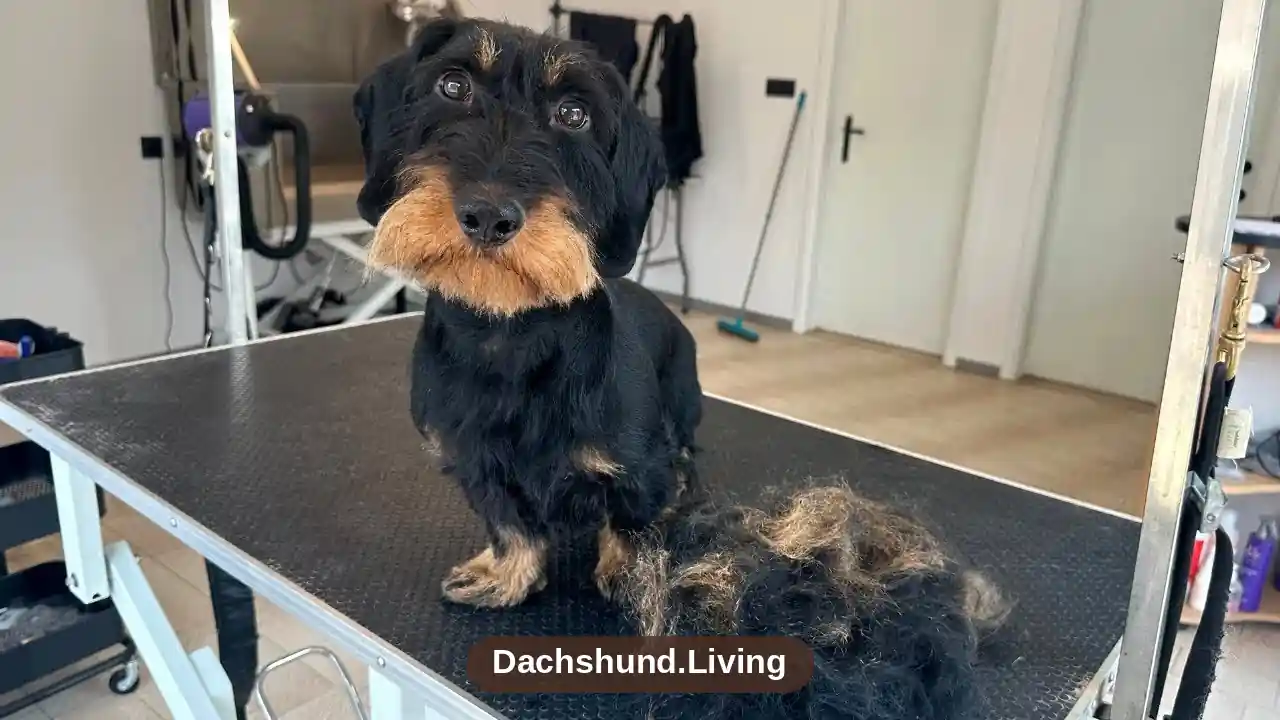

The first wire-haired dachshund I groomed looked worse halfway through than when I started, half stripped and half still fluffy, and I was sure I had ruined him. I had not. A week later his new coat came in harsh, tight and a richer colour than before.
This coat does not behave like a smooth or long-haired coat, and treating it the same way slowly wrecks it. Once you understand why it is stripped rather than cut, the rest falls into place.
Why Wire Coats Are Stripped, Not Clipped
A wire coat is really two coats: a harsh, bristly outer layer, almost like fine wire between your fingers, over a soft, dense undercoat that keeps the dog warm.
That harsh top layer sheds rain, shrugs off brambles and protects the skin in rough cover. You can read how the variety developed in my complete wire-haired dachshund guide.
Dead topcoat does not fall out on its own. It sits there, turns dull and pale, and blocks new hair from coming through. Pulling it out by the root is hand stripping, and it leaves room for a fresh, harsh hair to grow in.
Clippers do the opposite: they slice the hair at skin level, leave the dead root in place, and let the soft undercoat take over. A few clips and the coat turns fluffy, pale and cottony, soaking up water and dirt, and the colour often fades too.
The AKC dachshund breed standard calls for a uniform, tight, short, thick and harsh outer coat, a useful target when you are learning. Hand stripping is the one job you cannot swap for clippers if you want to keep that texture.
The Tools You Actually Need
Grooming catalogues will sell you forty items for this job. You need about eight, and decent versions last the life of the dog.
- A stripping knife in a medium grade to start. One knife handles most of a pet coat.
- A stripping stone or pumice block, kinder than a knife on the head and ears.
- Finger cots or latex gloves. Bare fingers slip and get sore fast.
- Grooming chalk, dusted through the coat to make slippery hairs easier to hold.
- A slicker brush with protected tips, for loose undercoat and surface dirt.
- A metal comb with wide and fine teeth, to find tangles the brush skims over.
- Dog shampoo made for harsh coats. Heavy moisturising formulas soften the texture.
- Nail clippers or a grinder, plus styptic powder for the odd nick.
Brushing Between Strips
Brush two or three times a week, and daily in spring and autumn when the undercoat turns over. Ten minutes is plenty. Work the slicker with the direction of growth, then follow with the comb to the skin.
Check the friction spots every time: behind the ears, under the front legs, around the tail and through the beard. A mat you can tease apart today becomes one you cut out next month.
These sessions also work as a health check, turning up lumps, ticks and sore patches early. My breakdown of all three dachshund coat types shows how much more checking the wire coat needs than a smooth.
Hand Stripping, Step by Step
Pick a time when the dog is calm and slightly tired, after a walk rather than before one. Good light matters, because you judge hair by colour and length. Settle him on a non-slip mat on a table, or on your lap.
- Brush and comb the whole coat first. Stripping a tangled coat pulls and hurts, and a sore dog will not sit still next time.
- Dust a little chalk through the topcoat and work it in with your fingers. You want grip, not a white dog.
- Start on the back and sides, where the coat is thickest and the dog minds least. Pinch a small tuft of the longest, dullest hairs between thumb and stripping knife.
- Pull with a short, firm tug in the direction the hair grows. Dead hair should come away with almost no resistance.
- Work in small sections and keep checking with your palm. Stripped areas feel shorter, tighter and rougher than untouched ones.
- Move to the shoulders, neck and head. Switch to the stone or your fingers here and take less off, since head hair grows back slowly.
- Go gently on the belly, chest and inner thighs. The hair is finer and the skin thinner, so pull smaller amounts.
- Comb through, tidy stray hairs with your fingers, then stop even if it is not perfect. Two shorter sessions beat one marathon.
One test tells you whether a hair is ready: if it resists and the skin lifts with it, leave it alone. Dead hair releases easily, almost like it was waiting to go.
Expect an hour to ninety minutes on a standard, less on a miniature. Your thumb will ache the first few times, then your grip relaxes and it fades.
Full Strip or Rolling the Coat
A full strip takes the topcoat right down every three to six months. The coat looks very short for a fortnight, then grows back in one even layer, and most owners find this rhythm easiest.
Rolling means stripping a small section every six to eight weeks instead, so the dog never looks scalped and the texture stays consistent all year. Pick whichever fits your life, because a routine you actually keep beats the perfect one you keep postponing.
Beard, Eyebrows and Furnishings
The beard and eyebrows, the furnishings, give a wire his expression. They need tidying, not stripping to the skin. Comb the beard forward and take out only straggly ends with your fingers or thinning shears.
Eyebrows need the lightest touch of all: comb them, remove hairs poking into the eyes, and leave the rest. Cut them short and that serious, quizzical look is gone for months.
The beard also needs washing far more often than the rest of the dog, since it drags through food, water and every interesting smell on a walk. Rinse and comb it after muddy outings, and trim the tufts between the paw pads level with the pad so his footing stays sure.
Bathing a Wire Coat
Wire coats need far fewer baths than people expect: every one to three months is typical, and plenty go longer. A dog who smells doggy a week after every bath is usually being washed too often, not too little.
Frequent washing also strips the oils that keep the topcoat harsh. My guide to how often you should bathe a dachshund covers the other coat types too.
When bath day comes, use lukewarm water and a dog shampoo, never a human one. Work the lather through the beard and legs, where the grime lives. Rinse until the water runs clear, then once more, because leftover shampoo is a common cause of itching.
Timing matters if you strip, since bathing beforehand makes hair slippery and hard to grip, so bathe after stripping or leave a few days between the two. Towel dry first, brush while the coat dries, and dry the undercoat right down to the skin, since trapped dampness invites hot spots.
Nails, Ears and Teeth
Nails need attention every two to four weeks, since long nails change how a dachshund stands and walks, which matters for a back that already takes extra load. Clicking on a hard floor means you are overdue.
Take off small amounts at a time and keep styptic powder within reach. My guide to trimming a dachshund’s nails covers finding the quick on dark nails, the part that worries most owners.
Give the ears a weekly look for redness, a yeasty smell or dark wax, and wipe the visible part with a vet approved cleaner on cotton wool. Never push cotton swabs down the canal. Teeth matter too, since small breeds build tartar fast, so brush several times a week with dog toothpaste, which PetMD’s dachshund breed guide flags as a common breed problem when skipped.
Mistakes Beginners Make
The biggest mistake is reaching for clippers because stripping looks slow. One clip can usually be corrected with a couple of careful strips. A coat clipped for years is a much longer project, and some never fully recover their colour.
Pulling against the direction of growth runs a close second. It hurts, it breaks hair instead of removing it, and it teaches the dog to dread grooming. Always pull the way the hair lies.
Taking too much off the head and legs is another classic, since furnishings take months to regrow while body coat returns in weeks. Stripping a dirty, tangled coat causes needless pulling too, and if the topcoat is still live and holding fast, waiting two weeks often turns a battle into an easy session.
When a Professional Makes Sense
You do not have to do all of this yourself. A groomer who knows wire coats can strip a dog evenly in half the time a beginner needs, and watching one session teaches you plenty.
Ask one direct question before you book: do you hand strip, or do you clip? Plenty of salons clip without mentioning it, because it is faster. If they clip, keep looking.
Many owners handle brushing, bathing, nails and ears at home and book a professional strip two or three times a year. End every home session with a treat and a game. Dogs remember how grooming felt far longer than how tidy they looked.
Frequently Asked Questions
How often should I hand strip my wire-haired dachshund?
Every three to six months for a full strip, depending on coat growth. If you roll the coat instead, strip a small section every six to eight weeks and he stays tidy all year.
What happens if I clip a wire coat instead of stripping it?
The guard hairs get cut while their dead roots stay in place, so the soft undercoat takes over and the coat turns fluffy and pale. One clip can usually be corrected, but repeated clipping is hard to reverse.
Does hand stripping hurt the dog?
No, not when the hair is ready. Dead topcoat releases with almost no resistance. If the skin lifts when you pull, that hair is still live, so leave it and move on.
Can I strip with just my fingers instead of a knife?
Yes. Finger stripping gives the best feel for which hairs are ready, and many people prefer it for the head and ears. A knife or stone is faster on a thick body coat, and finger cots save your skin.
How often should I bathe a wire-haired dachshund?
Every one to three months, or when he is genuinely dirty or smelly. Washing more often strips the oils that keep the coat harsh and can dry the skin. Always use a shampoo made for dogs.



[…] texture crisp. Without it, the coat goes soft and loses its character. For the full routine, see how to groom a wire-haired dachshund step by […]
[…] Wire coats need hand-stripping to remove dead hair, so factor in that grooming commitment. Our wire-haired grooming guide explains the […]