
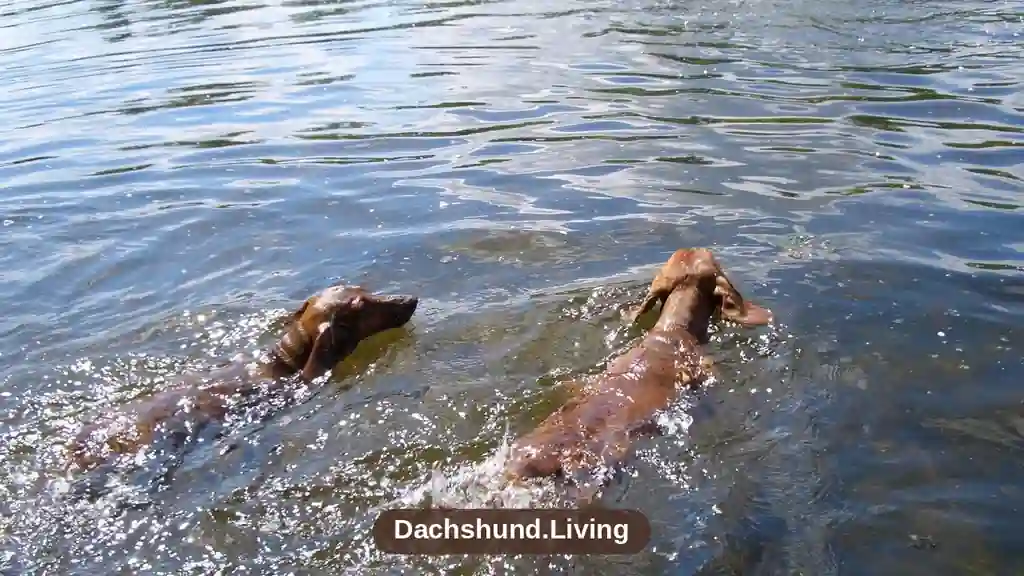

My dachshund walked up to the lake, looked at the water, looked at me, and sat down. Decision made, apparently. Ten minutes later he was paddling in the shallows with his tail going like a little rudder.
That is how it usually goes with this breed. They are cautious for about five minutes, then quietly brave. So yes, most dachshunds can swim, but their body was built for digging after badgers, not for water, and that shapes everything about how you should do it.
Can They Actually Swim?
Most healthy dachshunds can keep themselves afloat and paddle for short distances. Nobody would mistake them for a Labrador, and they will never look graceful doing it. But afloat is afloat.
Ability and enthusiasm are two different things, though. Some dachshunds love water from the first splash. Others would happily never get their feet wet again, and both reactions are completely normal for the breed.
Why That Body Struggles in Water
Picture the shape for a second. A long body, a deep chest, legs that are barely two inches long, and no webbing between the toes. Almost every part of that design makes swimming harder work than it is for a taller dog.
The long back
A dachshund has to hold that long spine flat and level while swimming. If the rear end sinks and the back bends, the discs take strain they really do not need. This is the same weak spot behind IVDD, which affects around one in four dachshunds over a lifetime.
It does not mean water is off limits. It means calm, level, short swims, and no panicky thrashing. If you have not read it yet, my notes on dachshund back problems and IVDD explain why I am so careful about this.
Short legs, hard work
Short legs have to paddle twice as fast to get half the result. First timers almost always go vertical, front paws splashing while the back end drops. It looks funny for about three seconds, then you realise how much effort it costs them.
They also sit low in the water and have no thick water resistant coat to hold warmth. A small dachshund chills quickly, even on a warm day. Cold and tired is a bad combination in any dog, and it arrives faster in this breed.
Why I Still Let Mine Swim
Here is the other side of it. Water carries the dog’s weight, so the joints and spine get a break while the muscles still work hard. For a breed that piles on weight easily and pays for it through the back, that kind of exercise is gold.
Vets often suggest controlled swimming for dogs who need gentle exercise, including older dogs, once they have been checked over. Mine comes out of the water tired, happy, and noticeably looser in his movement. If you are planning his weekly activity, my breakdown of how much exercise a dachshund needs shows where swimming fits in.
The First Swim, Done Slowly
Please do not pick your dog up and drop him in. I have seen people do it at the beach and it achieves one thing: a dog who hates water for life. The American Kennel Club makes the same point in its guide to teaching a dog to swim, which is blunt about letting the dog choose the pace.
Start where feet touch
Pick a spot with a gentle slope and let him wander in on his own. Wade in first yourself if you can. Most dachshunds follow their person long before they trust the water, and a few treats at the shoreline do no harm either.
Hold the belly, keep him level
When he first lifts off the bottom, slide one hand under his belly, toward the back legs. That little bit of support keeps the spine level and stops the rear end sinking. Within a minute or two, most dogs start kicking the back legs on their own.
Show him the way out first
At a pool, getting out matters more than getting in. A dachshund cannot use a ladder, and a tired dog who cannot find the steps will panic fast. Walk him to the steps or a ramp again and again, with a treat each time, until heading for the exit is automatic.
Five minutes is a swim
For a first go, five to ten minutes is plenty. Even a keen swimmer does better under fifteen minutes, with rests on solid ground in between. Quit while he is still enjoying it, because that is the memory he brings back next time.
Safety Rules I Never Skip
Never leave a dachshund alone near water, not even to grab something from the car. A dog in trouble does not bark or splash the way people expect. He just goes quiet and slips under, and it can happen in seconds.
Put a proper life jacket on him, sized for a small dog, with a handle on the back. Beginners, seniors, and shaky swimmers need one every time, and I use one in open water even with a confident dog. The handle alone is worth it when you need to lift a wet, wriggly dachshund out quickly.
Test the water with your own hand before he goes in. If it makes you flinch, it is too cold for a dog his size. A rough guide some owners use is that air temperature plus water temperature should add up to at least 100 degrees Fahrenheit, but your own reaction tells you plenty.
Take fresh water for drinking and offer it often. Dogs gulp a lot of pool or lake water while they swim, and drinking too much water too fast carries its own risks. Short sessions, regular breaks, and flat floating toys instead of balls all help, since a ball forces the mouth wide open with every grab.
PetMD has a solid set of pool safety tips for dogs that I would read alongside this, especially the parts on fencing and rinsing after a swim. Chlorine, salt, and lake muck all irritate skin and ears if they are left to dry in the coat.
Pool, Lake or Sea?
A pool is the easiest place to learn. The water is still, you know the depth, and there are no surprises under the surface. The catch is the chemicals and the exit, so rinse him well afterwards and dry inside those long ears, where trapped moisture loves to cause trouble.
A calm lake with a sloping bank comes a close second, because the dog picks his own depth. Steer clear of strong currents, sudden drop offs, and thick weeds that wrap around short legs. In hot weather, walk away from any water with a green, paint like scum on it, as blue green algae can poison dogs.
The sea is the hardest of the three. Waves knock a low dog around, currents pull harder than they look, and swallowed salt water upsets stomachs quickly. Mine paddles at the edge on calm days and that is enough.
Whatever you choose, a snug fit matters, and my guide to choosing the right harness for a dachshund covers what to look for if you use one for lifting and guiding.
Once You Are Back on Dry Land
Rinse him with clean water as soon as you finish, then dry him properly, ears, armpits, and belly included. A damp dachshund standing in a breeze loses heat fast. Offer a drink, find some shade, and let him rest.
Keep half an eye on him for the rest of the day. If he seems wiped out hours later, vomits, or holds his tail low and stiff, ring your vet rather than waiting it out. And if he is healing from an operation, check my notes on when to spay or neuter a dachshund and ask the vet before any swimming, because wet incisions and water do not mix at all.
One last thing from me, and I say this as an owner, not a vet. If your dachshund has any back trouble, is recovering from anything, or you are simply not sure swimming suits him, ask your own vet before the first swim. A two minute conversation now beats a worrying evening later.
Frequently Asked Questions
Do dachshunds like swimming?
Some adore it and some want nothing to do with it. Most sit in the middle and learn to enjoy short, calm swims. If yours says no, believe him and try paddling in the shallows instead.
Is swimming bad for a dachshund’s back?
Calm, controlled swimming is usually kind to the back because the water holds the weight. Trouble comes from panic, thrashing, jumping in from height, and sessions that go on too long. Dogs with known back problems should only swim with their vet’s agreement.
Does my dachshund need a life jacket?
While learning, yes, and in any open or deep water too. Pick a small dog jacket with a chin support and a strong top handle. Even a good swimmer is safer wearing one on a boat.
Can a dachshund puppy swim?
Puppies can paddle, but they chill and tire very quickly. Wait until your puppy is a few months old and steady on land, then keep it to a minute or two in warm, shallow water with you right beside him.
How do I dry his ears after a swim?
Wipe the outer ear and under the flap gently with a soft, dry towel. Never push anything down into the ear canal. If you notice head shaking, scratching, or a smell in the days after, get your vet to have a look.