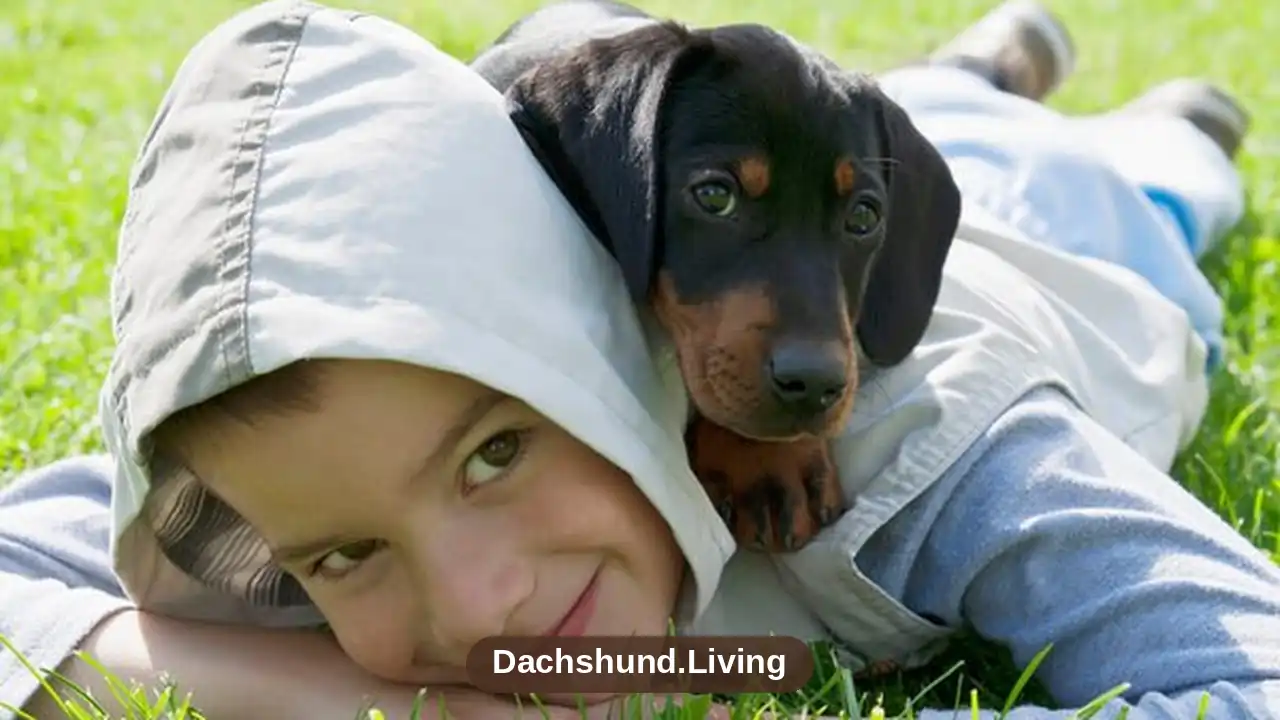

Parents ask me this more than any other breed question. Can a dachshund live happily with kids, or is that asking for trouble? My honest answer is yes, it can work beautifully, but this is not a dog you can just drop into a busy house and hope for the best.
I am Umar, and I have watched dachshunds grow up alongside children in more homes than I can count, including my own family circle. The good stories share the same pattern. The adults set clear rules early, and the kids learned them fast.
The hard stories share a pattern too. A small dog got grabbed, dropped or cornered one time too many, and everyone acted surprised when he snapped. That outcome is nearly always preventable, which is the hopeful part of this whole topic.
The Honest Answer First
Dachshunds love their own people, kids included. A dog raised in a family home will follow children from room to room, claim the warm spot beside them on the sofa and wait by the door when school runs late. Loyalty is not the problem here.
Tolerance is the thing to think about. This breed was made to face badgers underground, alone, with no help coming. That history leaves a dog who is brave, stubborn and quick to defend himself if he feels trapped or hurt.
The American Kennel Club dachshund breed page describes the breed as friendly and curious, and that matches the dogs I know. Friendly still has limits though, and a dachshund will tell you when you cross his, usually with a growl first.
Respect that growl. Never punish a dog for giving a warning, because a dog who stops warning is a dog who may bite without one. Teach kids that a growl means step back and tell an adult, every single time.
Toddlers Are the Hard Part
Under fives and dachshunds are the mix I worry about most. Toddlers grab ears, yank tails and fall on top of things. It is normal toddler behaviour, and a small dog experiences all of it as an attack.
A startled dachshund may snap before he thinks. Even a quick nip can break young skin and badly shake a parent. After one scare like that, families often lose trust in the dog, and the dog loses trust right back.
If a toddler and a dachshund already share your home, management carries you through these years. Never leave them alone together, not for the length of a kettle boil. Baby gates give the dog a child free zone, and his bed sits inside it.
Praise gentle hands the second you see them. Toddlers repeat what earns a happy reaction, so make calm stroking the best game in the house. In my experience this stage gets much easier around four or five, when a child can hold a simple rule in mind.
School Age Kids Are the Sweet Spot
From about seven or eight, things change completely. A child that age can learn how to read a dog, take part in training and remember the handling rules without being reminded every five minutes. This is where dachshunds really shine as family dogs.
Hallway fetch, scent games in the garden, a dog tucked against a child reading on the sofa. These small daily scenes are what the breed does best. Dachshunds are clever, and kids love teaching tricks that a stubborn little dog finally agrees to perform.
Many dachshunds pick one favourite person, and in family homes that person is often a child. The bond that forms is strong and steady. Give a school age child small real jobs, like filling the water bowl, and the dog learns fast that this kid is part of his care team.
Our dachshund puppy training tips work well for family training, because the sessions are short and reward based. Kids are often better at keeping sessions short and cheerful than adults are.
The Back Risk Most Parents Miss
Here is the part I wish every family heard before bringing a puppy home. That long spine is fragile, and kids cause more accidental back injuries than anyone else in the house, not through cruelty but through ordinary, loving clumsiness.
Picking a dog up under the front legs lets the back end dangle and strain. Dropping a dog from sofa height, wrestling on the floor, using him as a pillow. Each one can hurt a back that is already the weak point of the breed.
About one in four dachshunds develops disc trouble in their lifetime, and rough handling does a vulnerable spine no favours at all. PetMD covers the dachshund breed with a clear note on protecting that back, and I point family friends to it often.
So one rule sits above all the others in my house. Only adults pick up the dachshund, one hand under the chest and one under the rear, back kept level. Kids sit on the floor and let the dog climb into a lap instead, which the dog usually prefers anyway.
Ramps by the sofa and bed remove the other big risk, jumping down. Teach kids that the dog uses his ramp the way they use the stairs. It becomes normal household scenery within a week.
Simple Rules Kids Can Learn
Kids follow short rules they can say back to you. Long lectures slide straight off. We keep the list on the fridge in homes I help, and we practise it like a game before a dog even arrives.
- Use gentle hands. Stroke the back and sides, never pull ears, tail or skin
- Let a sleeping dog sleep. No surprise wake ups, ever
- No picking up the dog. That job belongs to grown ups
- Walk away while the dog eats, and leave his chews alone
- If the dog walks away, the game is over. Chasing is not allowed
- Use a calm voice near the dog, with no screaming or sudden lunges
That last rule about walking away matters more than parents expect. A dog who can leave a noisy room rarely feels the need to snap his way out of one. His crate or quiet corner should be a place kids never follow him into.
If crate training is new to you, our guide to crate training a dachshund shows how to make it a safe den rather than a punishment. In a house with kids, that safe den earns its floor space every day.
The First Meeting Matters
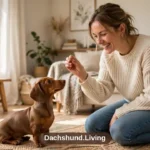
Keep the first meeting calm to the point of boring. Let the dog walk to the kids in his own time, while they sit still with a treat resting on a flat, open palm. Sniffing, a taken treat, a tail wag, that is a perfect start.
Short sessions win. Ten happy minutes, then a break, teaches the dog that children predict good things and then peace. An hour of excited crowding teaches the opposite lesson, and early lessons stick hard in this breed.
Build a routine in the first two weeks. Same feeding times, same walk times, same rules from every adult in the house. Dogs relax into routine, and relaxed dogs are the safest dogs around children.
Getting ready before the dog arrives helps more than any toy you can buy. Our new dachshund puppy checklist covers the gates, ramps and bedding that make a family home work from day one.
Puppy or Adult Dog for a Family
Families often assume a puppy is the safer bet because the dog grows up with the kids. Puppies are sweet, but they are also mouthy, fragile and slow to house train. A dachshund puppy and a toddler at the same time is a lot of supervision, all day, for months.
An adult dachshund with a known temperament is often the calmer choice. You can see exactly who you are getting, and a steady three or four year old usually slots into family life with far less chaos. Ask any rescue honestly about the dog and children, and listen to the answer.
Sex plays a smaller part than people think. Our comparison of male vs female dachshunds covers the small differences, but the individual dog in front of you matters far more. The same goes if you already have pets, since our notes on dachshunds and cats show how much early management shapes the result.
Watch Kids and Dachshunds Together
This short video shows the calm, supervised style of contact that works in real homes. Watch how much space the dog is given to choose. That choice is the whole secret.
Frequently Asked Questions
Are dachshunds safe around babies?
Only with constant supervision and clear separation when you cannot watch. Most dachshunds are curious about babies rather than hostile. A baby grabbing a fistful of skin can still get a snap, so they should never be left alone together.
Do dachshunds bite children often?
They bite more often than their cute looks suggest, usually from fear or pain rather than spite. Most incidents follow a startled sleep, a hurt back or a cornered dog. Supervision and respect for warnings like growling prevent nearly all of them.
What age child suits a dachshund best?
Around seven or eight is the sweet spot, when a child can follow handling rules reliably. Families with younger kids do make it work, but it takes gates, supervision and patience every day. The dog only relaxes when the rules hold.
Are miniatures worse with kids?
Miniatures are simply more fragile, so the risk runs both ways. Kids can hurt them more easily, and a frightened tiny dog may snap faster. Standards tend to feel sturdier for family life, though the same rules apply to both.
Can kids train a dachshund?
Yes, and they are often very good at it. School age kids with treats, short sessions and an adult nearby can teach sits, recalls and tricks. Keep it cheerful and end while the dog is still keen.
So, would I place a dachshund in a family home? I have, and I would again, in a home where the adults supervise, the kids learn gentle hands, and nobody treats that long back as a toy. Meet those terms and you get a loyal, funny little dog who will love your children for the next twelve to sixteen years.