
If you have stairs at home, you know this moment. Your dachshund hears a sound upstairs and takes off, and you are left at the bottom calling a name that is already gone.
I used to let it slide. My dogs could do the stairs, so I told myself the stairs were fine. Years of living with long backed dogs changed how I see that daily habit.
Most healthy adults can manage stairs. That is not the same as giving them a free run, ten or twenty times a day, at full speed. In my house we limit stairs, slow them down, and carry or ramp the dogs who need help most.
Why Stairs Worry Me
A dachshund carries a long spine on very short legs. The discs between the bones work as cushions, and in this breed those discs can harden and wear earlier than they do in most dogs.
That is the weak spot behind most back trouble. Our guide to dachshund IVDD and back problems explains it in plain detail, including the signs I watch for at home.
Stairs do not create that weakness on their own. What they add is repeat impact, a small twist on the turn, and a hard landing on the way down, and one trip means little while years of trips can add up.
Going Up Feels Different From Going Down
Climbing Up
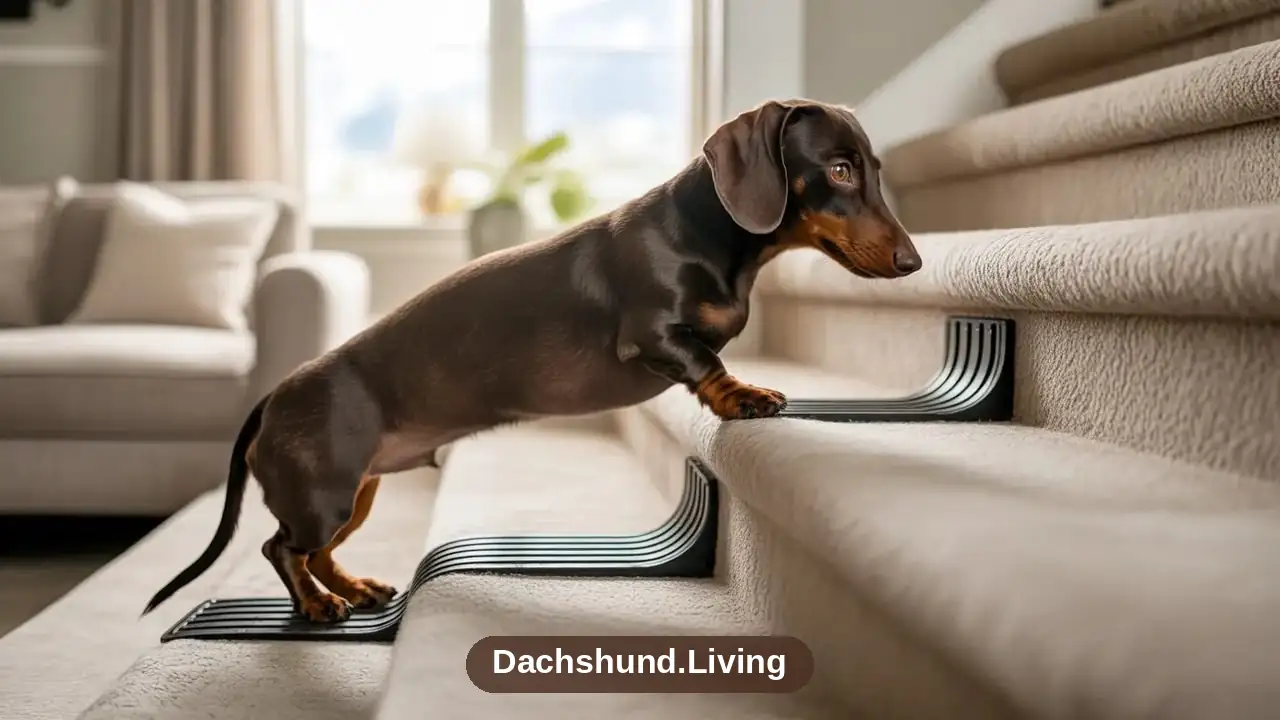
Going up is the easier trip for most of my dogs. They push from the back legs, keep their weight low, and most of them quite like the climb.
Speed is the part I watch. A dog who launches up two flights, five or six times before lunch, loads the same part of the back again and again. Puppies feel that load more because their joints are still forming.
Coming Down
Coming down has always worried me more. Each step drops weight onto the front legs and shoulders, and the back takes the jolt that follows.
This is where I have seen the slips. A tired dog, a smooth step and a dark hall can turn into a stumble in a second. If I carry a dog only one way, I carry them down.
Dogs Who Should Skip Stairs
Puppies under twelve months sit at the top of my list. Their bones are still growing, and there is no rush to make stairs part of the routine. I carry puppies and use a gate until they are older and steadier.
Seniors need a fresh look too. Stiff joints, weaker back legs and poorer eyesight can turn a familiar staircase into hard work. Our notes on senior dachshund care cover the small changes that helped my older dog most.
Extra weight makes every step harder. A heavy dachshund puts more force through the back on each landing, so I keep a close eye on how much a dachshund should weigh and adjust food early.
Any dog who has had a back scare, back surgery or a vet warning about rest stays off stairs until the vet says otherwise. No debate in my house on that one. Rest means rest.
What We Use Instead
A ramp is the fix I wish I had bought sooner. Ours has a gentle slope and a rough surface the nails can grip, and it does not wobble when a dog steps on it. Most of my dogs used it within a few days with treats placed along the way.
Start slow with a ramp. Let your dog sniff it flat on the floor first, then raise it a little at a time. A ramp that slides or tips will put a dachshund off in one try, and they remember it.
Baby gates do the boring, useful work. One at the top and one at the bottom stopped the casual trips I never even noticed before. Gates also keep puppies from teaching themselves the habit too early.
A good rest spot matters on the floor where your dog now spends more time. I look for firm support rather than a soft sink, and our guide to the best beds for dachshunds shows the styles that worked in our house.
How I Carry a Dachshund
Carrying sounds simple, and plenty of us get it wrong at first. I did. I used to scoop with one arm and let the back end hang, which is just what you want to avoid.
Slide one hand under the chest and one under the rear. Keep the back flat and level, close to your body, and take your own time on the steps. Never lift by the front legs alone.
A harness helps on short outdoor steps too. It gives you a steady hold without pulling on the neck, and our picks for the best harnesses for dachshunds explain what to look for in a good fit.
Stair Manners for Steps You Cannot Avoid
Some steps stay. We have three at the front door, and most homes have a set like that. For those, I teach slow and calm instead of fast and proud.
I walk beside my dog on a short lead and reward calm steps. I do not call them down from the bottom in an excited voice, and I do not chase them up. A solid wait at the top and bottom stops most flying starts.
Night trips need light. I put small night lights at the top and bottom of our stairs, and they cost very little. Older dogs judge steps better with light, and so do half asleep owners.
A dog who has had proper exercise is less likely to race around the house looking for action. Our guide to dachshund exercise needs sets out the daily walks and sniff time that keep mine settled indoors.
What Vets and Good Sources Say
I lean on vet sources for the back facts, not social posts. The AKC Canine Health Foundation overview of IVDD lists dachshunds among the breeds most at risk for disc disease and explains how discs break down over time.
VCA Hospitals notes that disc trouble in long backed, short legged breeds often shows up between three and six years of age. That age range surprised me. It is not just an old dog problem.
I am not a vet, and I cannot tell you what is right for your dog from a screen. If your dog uses stairs daily and you feel uneasy, ask your own vet at the next visit. They can check weight, age and back health and give advice for your dog alone.
Some signs should never wait for the next visit. Crying out, a hunched back, wobbly back legs, dragging paws or a sudden refusal to walk need a vet the same day. I treat those as urgent, every time.
A Ramp Build Worth Watching
This video shows a removable ramp built over home stairs for dachshunds. I like that it keeps the steps clear for people and gives the dog a calm slope instead.
Frequently Asked Questions
Can dachshund puppies use stairs?
It is best to hold off on daily stairs until after twelve months. Carry puppies or use a gate while their bones and joints are still growing. Short practice on two or three shallow steps, with you right there, is fine once they are steady.
Are ramps better than stairs?
For daily use, yes, in my experience. A gentle slope with a surface that grips puts far less jolt through the back than steps do. Most dachshunds learn a ramp within a week when treats do the teaching.
Should I carry my dachshund every time?
For puppies, seniors and any dog with back trouble, carrying makes sense. Support the chest with one hand and the rear with the other, and keep the spine level. For a fit adult, a ramp or gate is easier to live with long term.
Can stairs cause IVDD?
Stairs alone do not cause IVDD, which has strong roots in the breed and its build. Repeated jarring can still add wear to discs that are already at risk. Lower stair use, a healthy weight and regular vet checks work as a sensible set, not a promise.
My dog suddenly refuses the stairs. What now?
Treat it as a signal and book a vet visit. Pain, weakness or poor vision can all sit behind a sudden change like that. Carry your dog or use a ramp in the meantime, and never punish a refusal.
My House Rule Now
After years in a two storey house, my rule is plain. Ramps and gates handle the daily trips, and my vet handles the back worries. Stairs sit in the middle, used less often and used slowly.
Your dog will not miss the race to the top. Mine settled into the new routine in about a week, treats helped, and the house feels calmer for it.
A short note to end. This piece is my owner experience from living with dachshunds, not veterinary advice. If your dog shows pain or weakness, or you feel unsure about stairs at all, please check with your own vet first.