
For the first year I had him, my dachshund rode on my lap like a little co pilot. He stood with his front paws on my thigh, watching the road.
Then one morning, a cyclist rolled out of a side street and I braked hard. Nothing hit us, but my dog shot forward into the dashboard and slid into the footwell, yelping.
He was only shaken and bruised, and I got lucky. That was the last loose ride he ever took.
Why a Loose Dog Is a Projectile
A car stops fast. A loose dog inside it does not, because his body keeps travelling at the speed the car was doing until something stops him.
That something is usually the dashboard or the back of a front seat. A dachshund may only weigh 8 to 10 kilos, but at road speeds it lands with a force many times greater.
The long back makes it worse. A dog who lands twisted risks a serious back injury on top of broken bones.
That is why the words on the label matter less than the testing behind them. The Center for Pet Safety crash tests harnesses and carriers independently and publishes which ones pass, so a harness that carries its certification has earned the claim rather than printed it. When you compare products, look for the name of the testing body and the test standard, not just the words crash tested on the box.
He is also a danger to everyone else. A flying dog can strike a passenger or land under the pedals when the driver needs them most.
The Front Seat Airbag Problem
The front seat is the worst place in the car for a small dog, even in a harness. Front airbags are built for an adult human body, and they open with huge, sudden force.
For a dog low on the seat or on a lap, that force lands at head and chest height. It can kill a small dog even in a minor collision.
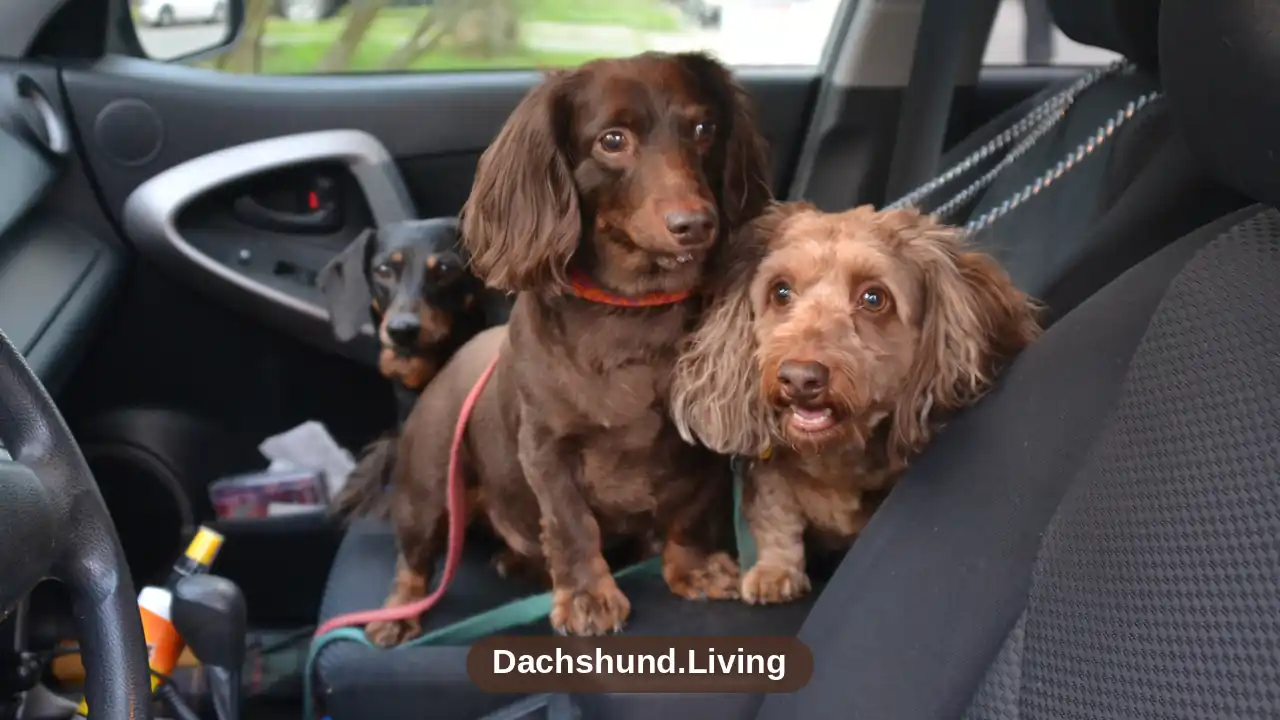
My rule is simple now. The back seat is his seat, every time, with no exceptions for short trips.
The American Kennel Club guide to dog car safety says the same thing plainly: dogs should not ride on a lap or loose in the car, and they belong in a crate or a safety harness in the back.
Parked Cars Heat Up Fast
Before restraints, I want the parked car rule in your head, because heat kills quietly. A parked car acts like an oven, even on a mild day.
The numbers surprised me. On an 85 degree day, the inside of a parked car can reach 102 degrees in just 10 minutes, and around 120 degrees within 30 minutes.
It climbs fastest at the start. On an 80 degree day, the inside can hit 99 degrees in 10 minutes and 114 degrees in half an hour.
Cracking a window does not fix it. The car heats at almost the same rate, and shade or a bowl of water does not save a dog either.
The ASPCA guide to travelling safely with pets is blunt: never leave your animal alone in a parked vehicle, for any amount of time. Dogs cannot cool themselves like we do, and heatstroke can kill very quickly.
Knowing the signs matters as much as knowing the rule, because heatstroke moves fast. The VCA Hospitals guide to heat stroke in dogs lists heavy panting, fast breathing, dry or sticky gums, and wobbling or collapse as warning signs. If you see them, move the dog to shade, pour cool water, not ice cold water, over the head, stomach, armpits and feet, and get to a vet at once, because heatstroke is an emergency even after the dog looks cooler.
So my habit is boring and absolute. Never leave your dachshund alone in a parked car, not even for two minutes. If he cannot come in, he stays at home, or an adult stays with him with the air conditioning running.
Restraints, Compared Honestly
Once heat is handled, the next job is choosing how your dog rides. Owners talk about restraints as if they are all the same. They are not.
Some are properly tested for a crash, some just keep a dog in one spot, and one popular option is no restraint at all. This table is how I sort them.
| Restraint type | How it works | Safety level | Best for |
|---|---|---|---|
| Crash tested harness | Padded harness clips into the seat belt or an anchor, holding the dog on the back seat. | Highest, if independently crash tested and well fitted | Most dachshunds, daily rides of any length |
| Secured crate or carrier | Dog rides in a sturdy crate strapped or wedged in the back so it cannot slide or tip. | High, if the crate is strong and fixed in place | Nervous dogs who already rest happily in a crate |
| Booster seat | Raised seat lifts a small dog to see out, with a clip onto his harness. | Moderate at best. Contains the dog, rarely crash tested | Calm, tiny dachshunds on short trips, with a harness |
| Back seat barrier | Net or grille between front and back seats keeps the dog behind the driver. | Low. Stops distractions, but the dog is still loose | An extra layer only, never the main restraint |
| Loose dog | Dog rides free on a seat, a lap, or in the footwell. | None. The dog can be thrown or cause a crash | Nothing. I do not use this option any more |
A barrier is a distraction guard, not crash protection: it flexes, and a loose dog still flies. A booster seat is a view, not a restraint, and its short tether only holds if the harness underneath is crash tested and the clip is rated for the dog’s weight. Judge every option by one question, what holds the dog when the car stops in a metre, and only a tested harness or a fixed crate passes it.
Getting the Harness Fit Right
For the car, I look for wide, padded straps, strong hardware, and proof of testing rather than bold label claims. A short practice drive shows up any rubbing.
Fit matters as much as the brand. Straps should sit snug on the chest without pressing on the throat, and the dog should still sit up and lie down. My guide to the best harnesses for dachshunds covers measuring that long chest at home.
If You Use a Crate Instead
A crate suits dogs who feel safer in a small, familiar space. It needs to be big enough to stand, turn, and lie flat in, and no bigger.
The crate itself must be secured. An unsecured crate is a heavy box sliding around with your dog inside it, so strap it down.
If your dog is new to a crate, build that skill slowly at home first. My notes on crate training a dachshund walk through the patient way I did it, because a car is a bad place for a first lesson.
Getting In and Out Safely
The ride is only half the risk. The jump down from the seat or boot onto hard ground can be the worst moment of the trip.
I lift mine in and out, chest supported with one hand and rear with the other, so his back stays level. A portable ramp does the same job.
A ramp earns its place when it is long enough to make a gentle slope, has a non-slip surface, and is rated for a dog heavier than yours. A short, steep ramp is barely better than the jump it replaces. My notes on the best ramps for dachshunds cover the lengths and surfaces that suit a low dog, and the same ramp works at the car, the sofa, and the bed.
Never let him leap out the moment a door opens. That habit is exactly the sort of repeated impact I try to avoid, for the reasons in my guide to dachshund IVDD and back problems.
Clip the lead on before you unclip the harness or open the crate. A loose dachshund in a car park can be gone in seconds.
The Rhythm of a Long Trip
On a long drive, I plan the trip around stops rather than miles. We stop every 2 to 3 hours, and sooner if he is restless or has not drunk for a while.
Each stop has the same small routine. Lead on first, a toilet break on grass away from traffic, a drink from his own bottle and bowl, and a short, slow wander.
That stretch helps stiff joints, but I keep it gentle. No racing around and no leaping back into the car. Five to ten calm minutes is plenty.
Food waits for the bigger breaks. A full meal in a moving car invites sickness, so travel days start with a smaller, early breakfast.
The video below shows a sensible car routine, from securing a dog in the back to keeping him settled.
Travel Anxiety and Car Sickness
Some dachshunds shake, drool, whine, or are sick within ten minutes. Puppies often grow out of car sickness, but anxiety can stick if every ride ends at the vet.
Watch for early signs: lip licking, yawning, drooling, panting, and a dog who goes very quiet.
Those signs can mean two different things, and telling them apart changes the fix. True motion sickness comes from the inner ear, and the VCA Hospitals guide to motion sickness in dogs notes puppies often outgrow it by about one year old as the inner ear matures. Anxiety looks similar, but the dog is reacting to the car itself, often because his only rides end at the vet, so short practice trips to pleasant places help more than medicine in that case. If you are unsure which one you have, my guide to dachshund car sickness walks through the difference, and your vet can settle it.
Gentle Fixes That Helped Us
We rebuilt the car as a good place in tiny steps. First he sat in it on the drive for a treat with the engine off, then with the engine on, then for a slow trip around the block.
Most early rides ended somewhere he liked, like a favourite walk. Within weeks, the car meant a walk might be coming, not trouble.
Timing food helps with sickness too. I feed him 3 to 4 hours before a trip, so he travels on a mostly empty stomach, and I keep the car cool with fresh air while we move.
A familiar blanket and a safe chew help too. The calming ideas in my dachshund separation anxiety tips helped here too, since unsettled dogs often panic in the car too.
If sickness or panic carries on, talk to your vet. Medicines exist for both, but they should come from a vet who knows your dog. I am an owner, not a vet.
Frequently Asked Questions
What is the safest way for a dachshund to ride in a car?
On the back seat, in a crash tested harness clipped to the seat belt, or in a sturdy crate that is secured so it cannot slide. Both keep him away from the front airbag.
Can my dachshund ride on my lap if I hold him tight?
No. In a hard brake or a crash, no grip is strong enough to hold a dog, and a lap is the most dangerous spot in the car because of the steering wheel and airbag.
How often should I stop on a long drive with a dachshund?
Every 2 to 3 hours works well for most dogs. Offer water, give him a toilet break, and let him stretch his legs slowly on the lead. Lift or ramp him back in afterwards.
What can I do if my dachshund gets car sick?
Start with short practice drives, feed the last meal 3 to 4 hours before you travel, and keep the car cool with fresh air. If he is still sick, ask your vet about travel sickness medicine.
Can I leave my dachshund in the car if I crack the windows?
No. A parked car heats up at almost the same rate with cracked windows, and it can reach dangerous temperatures within 10 minutes on a warm day. Take him with you or leave him at home.
My dog trusted me completely on that lap, and trust is not a restraint. Buckle him in, keep him in the back, and plan the stops.