
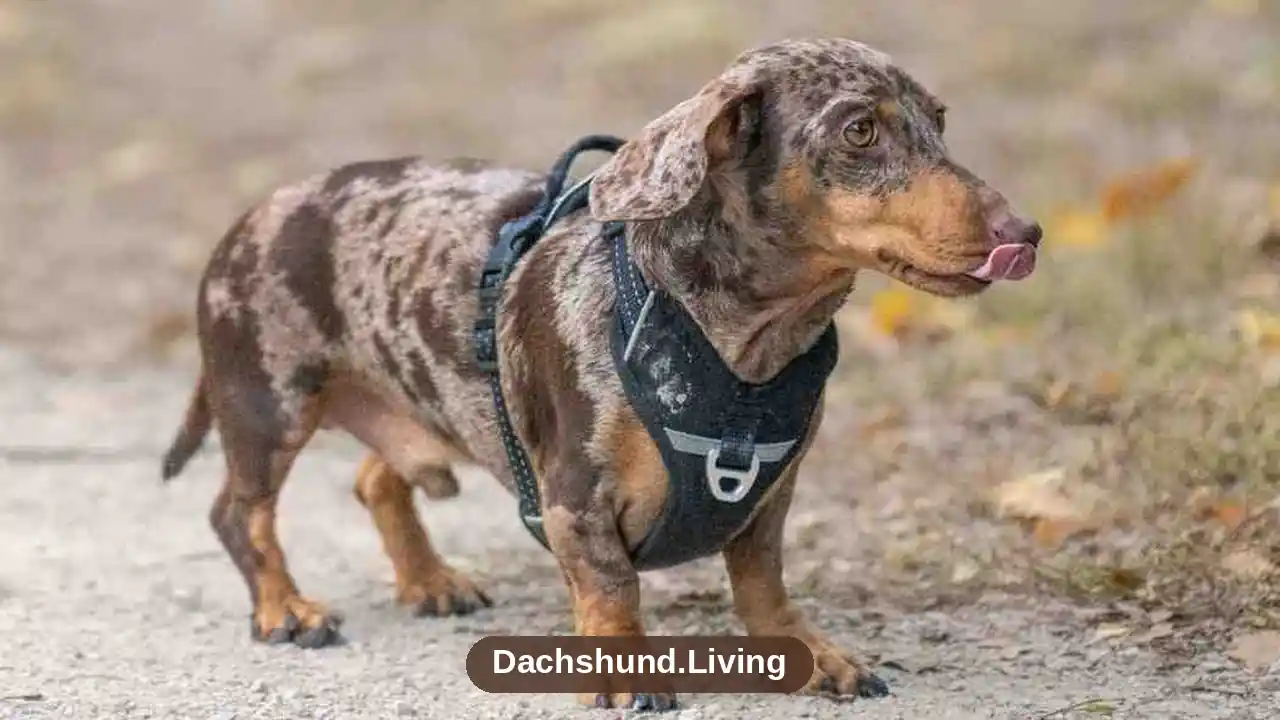

The first dapple dachshund I ever met stopped me mid sentence. Her coat looked like sunlight through leaves, dark in one patch and pale silver in the next, with one blue eye watching me the whole time.
That look is unforgettable, and it raises fair questions. What causes the pattern, is a dapple dog healthy, and what should you check before bringing one home?
This is the one complete dapple guide on this site, with the genetics folded in properly and the health section kept honest.
What a Dapple Dachshund Is
Dapple is a coat pattern, not a breed, a size, or a separate type of dachshund. A dapple can be standard or miniature, and the pattern can sit on a smooth, longhaired, or wirehaired coat.
You can see how those coat and size options fit together in our guide to the types of dachshunds. Under the spots, a dapple is still a dachshund, bold, loyal, noisy, and convinced it runs the house.
The American Kennel Club dachshund breed page lists dapple among the recognised patterns for the breed. That recognition matters, because it separates a long established pattern from a novelty invented for adverts.
What the Pattern Looks Like
Dapple shows as lighter, diluted patches scattered over a darker base colour. The patches have soft, uneven edges, and they can cover most of the body or appear as one small splash on the chest.
No two dapple coats match. One puppy may have bold marbling down its back, while a littermate has only faint flecks that you notice in bright light.
On a smooth coat the pattern looks crisp, almost painted on. Longhaired coats blend and soften it, and wirehaired coats mute it under the rough texture.
Base Colours Under the Dapple
Dapple is a modifier, which means it sits on top of a base colour and changes parts of it. The base colour decides what the diluted patches will look like, so it helps to learn the main combinations.
Black and Tan Dapple
This is the combination most people picture first. The black areas dilute into silver grey or blue grey patches, while the tan points on the muzzle, chest, and legs usually stay rich and warm.
The contrast is strong, so the marbling stands out from across a room.
Chocolate Dapple
A chocolate base dilutes into lighter tan, beige, and milky brown patches. The effect is softer than black and tan, more like swirled cocoa than marble.
Chocolate dapples often have lighter noses and amber or greenish eyes, and markings can fade slightly with age.
Red Dapple
Red dapples show cream or fawn patches over a red base, and the pattern can be subtle. In some adults the dappling almost disappears in normal light and only shows in the sun.
That subtlety matters for breeding, not just looks. A red dog can carry the dapple gene with barely visible markings, which is one reason testing beats guessing from photos.
Eye Colours in Dapples
The same gene that dilutes the coat can dilute pigment in the eyes. Brown eyes are common, but dapples also produce the eye colours that get shared in photos again and again.
Both eyes may be blue, pale and striking against a dark coat. One eye may be blue while the other stays brown, a look often called odd eyed or wall eyed.
A single eye can also be partly blue and partly brown, split into sections within the iris. In a single dapple dog these eye colours are a pigment quirk, not a sign of poor vision on their own.
Noses and paw pads can show pink patches for the same reason. If an eye looks very small, cloudy, or uneven in shape, that is a different matter, and a vet should check it promptly.
Dapple or Piebald
People mix up dapple and piebald often, and sellers sometimes use the confusion. Piebald is a white spotting pattern with solid coloured patches, while dapple dilutes colour inside the patches themselves.
A quick test helps. Piebald patches keep their full, solid colour and sit on white, but dapple patches look washed out or marbled compared with the base coat.
Our side by side guide to piebald vs dapple dachshund walks through photos and edge cases in detail. The distinction matters because a dog can carry both patterns, and a mostly white dapple needs closer questions about its parents.
The Genetics in Plain English
Dapple is the dachshund name for the pattern most breeds call merle. One gene does the work, and you only need two ideas to follow it, copies and dilution.
Think of pigment as paint. The merle gene waters down that paint in random patches, so some hairs come through full strength and others come through pale.
Pigment cells also help the eyes and inner ears develop, which is why this gene deserves respect beyond looks.
One Copy Makes a Single Dapple
Merle is a dominant trait, so a puppy needs only one copy to show the pattern. Breeders often write that as Mm, one merle copy paired with one normal copy, and the dog that carries it is a single dapple.
A single dapple bred to a solid coloured dog passes the copy to roughly half the puppies on average. The rest inherit the normal copy from the dapple parent and arrive solid, with no dapple risk passed on from that pairing.
Only one parent needs to be dapple for dapple puppies to appear. If a breeder tells you both parents had to be dapple to get the pattern, that claim alone is a reason to walk away.
Two Copies Make a Double Dapple
A double dapple inherits one merle copy from each parent, written as MM. That can only happen when two dapple carrying dogs are bred together, a pairing often called dapple to dapple.
The maths is simple and sobering. On average, one puppy in four from that pairing inherits both copies, half inherit one copy, and one in four inherits none.
Double dapples often look mostly white, with faint patches and very pale eyes. Looks vary though, so a DNA test, not a photo, is the reliable way to know what a dog carries.
Why Good Breeders Test
Testing matters because the eye can miss this gene. A red dapple may show almost no pattern, and a dog with a tiny hidden patch can still pass on a copy.
A DNA test tells the breeder exactly what each parent carries before any mating happens. With that result in hand, the breeder pairs a dapple only with a dog that carries no copy, and double dapples cannot occur.
Reputable breeders test, keep the paperwork, and show it without being chased. A breeder who shrugs at testing is asking you to accept a risk that no coat pattern is worth taking.
Health, Stated Honestly
I am not a vet, and this section is general information, not medical advice for your dog. If anything here worries you about a dog you own, your own vet, who can examine the dog, is the right call.
Here is the balanced picture I wish more adverts gave. Single dapples are generally healthy dogs, with no extra illness burden from carrying one merle copy.
They still face the normal dachshund risks, above all the long back. The PetMD dachshund breed overview covers those breed wide concerns, including disc disease, weight, and lifespan, in plain terms.
So I care for my dapples the way I care for any dachshund. Keep the weight lean, use ramps, fit a harness, and keep up with eye and ear checks at annual visits.
Where the Serious Risk Sits
The serious risks linked to this gene sit with double dapples. With pigment missing in places it is needed, the eyes and ears may not form or work as they should.
Double dapples have higher rates of deafness in one or both ears. Deafness from this cause is usually present from birth and does not reverse, though deaf dogs can live full lives with training built on hand signals.
Vision problems in double dapples can include abnormally small eyes, gaps in eye tissue, and in severe cases blindness. Some puppies are affected in one eye only, and some in both, which is why litter averages hide real individual suffering.
Mostly white coats also burn more easily in strong sun. Producing these dogs on purpose is a choice, not an accident, and the dogs carry the cost.
Our guide to the double dapple dachshund covers the living with side in depth, from hand signal training to keeping a steady layout at home for a dog with poor vision. Read it before judging, and read it twice before buying.
Buying a Dapple Puppy Ethically
Demand for this pattern is high, and high demand draws in careless sellers. The good news is that a few direct questions sort careful breeders from the rest very fast.
Ask what pattern and colour each parent is, and ask it plainly. Then ask the question that matters most, have both parents been DNA tested for the merle gene, and can you see the results?
Ask if the breeder ever pairs dapple with dapple, and listen for a flat no. Any hedging, joking, or talk of rare whites should end the conversation.
Ask to meet the mother and see where the puppies are raised. A clean, calm home, a relaxed mother, and a breeder who asks you hard questions in return are all good signs.
Our checklist on how to find a reputable dachshund breeder gives the fuller set of questions, records to request, and warning signs to watch for. Print it, take it with you, and use it even if the puppies are very cute, especially then.
The Rare Label Trap
Be careful with adverts selling mostly white puppies as rare double dapples at a premium price. Rare is doing heavy work in that sentence, because the whiteness can signal the exact pairing careful breeders refuse to make.
A higher price does not prove careful breeding. Pay for proof, health records, and honesty, not for a label.
Walking away is hard when a puppy is in your arms, so decide your lines before you visit. If the testing proof is missing or the parents include two dapples, leave, and let the breeder know exactly why.
Rescue is the other honest route. Dapples, including double dapples needing patient homes, do come through breed rescues.
Living With a Dapple
Day to day, a single dapple needs nothing exotic. Grooming follows the coat type, a quick brush for smooth coats, regular brushing for longhairs, and stripping a few times a year for wirehairs.
Training follows the breed, short, fun sessions, good rewards, and patience on rainy days when the garden suddenly seems unacceptable. Expect a watchdog bark, a burrower under blankets, and a dog that picks one person and follows them from room to room.
With good care, dapples share the usual dachshund lifespan of about 12 to 16 years. Protect the back, keep the mind busy, and those years are full ones.
Frequently Asked Questions
Is a dapple dachshund a separate breed?
No, dapple is only a coat pattern. A dapple puppy is a full dachshund, standard or miniature, in any of the three coat types.
Are single dapple dachshunds healthy?
Generally, yes, a single dapple is as healthy as any other dachshund. The serious hearing and vision risks are linked to double dapples, not to one copy of the gene.
Why should two dapple dachshunds never be bred together?
That pairing gives each puppy roughly a one in four chance of inheriting two merle copies. Those double dapple puppies face much higher rates of deafness and eye defects.
Can a dapple dachshund have two different coloured eyes?
Yes, one blue eye and one brown eye is common in dapples, and a single eye can be partly blue too. In a single dapple, that colour split does not harm vision by itself.
How can I tell a dapple from a piebald?
Look inside the coloured patches. Dapple patches look diluted or marbled, while piebald patches stay solid and sit on a white coat.

[…] builds muscle and repairs tissue. A good dog food for a mini dachshund should list a named meat like chicken beef or fish as the first ingredient. Aim for at least […]
[…] coat. The effect looks marbled or mottled, and genetically it is the merle pattern at work. Our dapple Dachshund guide goes deeper on living with […]
[…] version, and for daily care it is honestly enough. For the full picture, read our guide to the dapple dachshund, which covers the genetics in proper […]