
I get asked about piebald vs dapple dachshunds more than almost any other coat question. The two patterns look confusing at first glance, especially when a puppy has a lot of white on it. Once you know what made the markings, telling them apart gets much easier.
Here is the short version I give friends. Dapple dilutes color in soft, mottled patches, while piebald removes color completely in clean, solid patches. That one difference explains the eyes, the nose, and the health worries that come with each pattern.
A Quick Look at Coat Genetics
Coat color in a dachshund comes down to a small set of genes working together. Some set the base color, like black and tan, chocolate, red, or cream. Others change that base, either by watering it down in places or by switching pigment off in patches.
You just need to know which pattern does what, then look at patch edges, eyes, and nose. I walk through both patterns below.
What a Dapple Dachshund Is
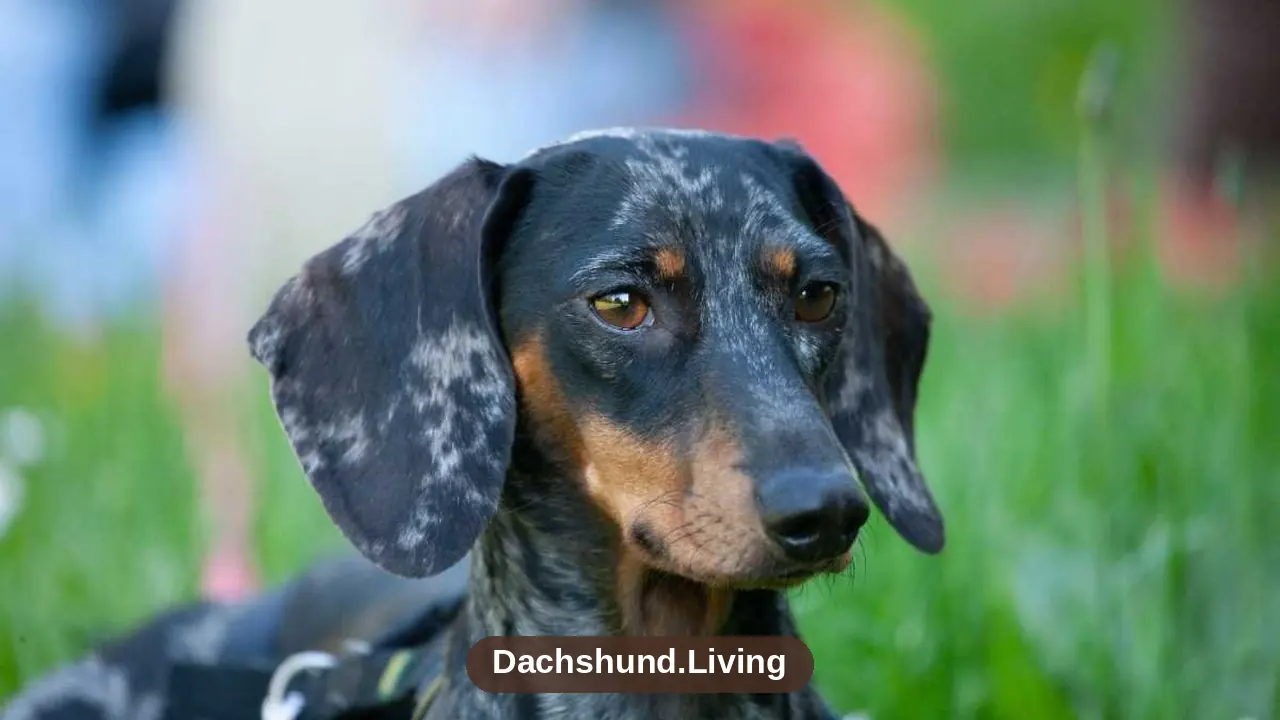
A dapple dachshund wears irregular patches of lighter color over a solid or sable base coat. The effect looks marbled, almost like someone dabbed a lighter shade across the dog in random spots. My full guide to the dapple dachshund covers daily life with one in more detail.
Dapples show up on every base color. You will hear names like black and tan dapple or chocolate dapple at shows and in breeder listings. Each name is just the base color plus that telltale lightened patchwork on top.
The merle gene behind it
Dapple is the merle pattern, controlled by what breeders call the M locus. One copy of the gene, written as Mm, produces the dapple look because the gene shows its effect even with a single copy. Two copies, written as MM, produce a double dapple, and that is a very different dog.
With one copy, merle dilutes random sections and leaves the rest at full strength. With two copies, the dilution goes further and strips pigment from the eyes and ears, where serious problems begin.
How to spot a dapple coat
Look first at the edges of the light patches. On a dapple, they are soft and irregular, and the lighter areas melt into the darker base with no clean border. The lightened hair usually reads as gray, cream, or pale tan, depending on the base color underneath.
Then check the eyes and nose, because they often give the game away. Dapples can have blue eyes, partly blue eyes, or one eye of each color. Noses may show pink mottling or turn mostly pink where pigment has been diluted.
Health risks to know
A single dapple dachshund is generally a healthy dog, and I want to be clear about that. The danger sits with the double dapple, which faces high odds of hearing loss, from partial deafness to complete deafness. Eye problems are common too, including undersized eyes, cataracts, and blindness.
That is why responsible breeders never pair two dapples together. The AKC dachshund breed page is a good starting point for the official standard and breeder expectations. If a breeder cannot explain how they avoid double dapples, I would walk away.
What a Piebald Dachshund Is
A piebald dachshund shows crisp, solid patches of color on a white base. That white is not faded color at all. It is hair and skin with no pigment, which is why piebalds look so bold and often quite symmetrical.
The colored patches can be any standard color, such as black and tan, chocolate and tan, or red. Some piebalds have just a white chest bib and a few splashes of color. Others are mostly white with only small colored patches left.
The piebald gene behind it
Piebald comes from the S locus and a recessive allele written as sp. A dachshund needs two copies, one from each parent, written as sp sp, before the pattern shows. The gene stops pigment cells from reaching certain areas while a puppy develops, leaving those areas white.
How much white appears varies a lot, even in the same litter. Modifier genes nudge the result, so piebald parents can produce anything from a lightly marked dog to a nearly white one.
How to spot a piebald coat
Check the edges again, because piebald edges are the opposite of dapple edges. The borders are sharp and clean, the white is pure and solid, and there is no mottling inside the white areas. You will not see washed out, in between tones the way you do on a dapple.
Eyes and nose help confirm it. Piebald eyes stay dark brown, matching the colored patches, and the nose is normally black or liver. A pink patch can appear if white covers part of the muzzle, but you will not see the blue eyes or mottled nose that point to merle.
Health outlook for piebalds
The piebald gene does not carry the deafness and blindness risks tied to double merle. Piebalds are generally healthy dogs with no pattern linked predisposition that I worry about. The PetMD dachshund breed profile gives a fair overview of breed wide health concerns.
Like every dachshund, a piebald still needs care for the usual breed issues, especially the back. Weight control and sensible jumping habits matter far more than coat pattern.
Piebald vs Dapple Side by Side
Genetics aside, your eyes can usually settle this in about ten seconds. Dapple dilutes color, and piebald removes it. Almost every visual clue follows from that single distinction.
- Patch edges: soft and blurred on a dapple, sharp and clean on a piebald.
- Base look: mottled and multi tonal on a dapple, pure white with full strength color on a piebald.
- Eyes: blue, partly blue, or mismatched on a dapple, dark brown on a piebald.
- Nose: pink mottled on many dapples, black or liver on most piebalds.
Patches vs mottling
On a dapple, the light areas look washed out and splotchy. They fade into the base color with no clear line where one tone ends and the next begins. Run your eye along a patch edge and it will feel blurry, almost like watercolor.
On a piebald, the white is stark and solid from edge to edge. Colored patches end in clean lines, and the contrast is bold at any distance. If the white looks truly white rather than pale, you are probably looking at piebald.
Eyes and nose clues
Blue, partly blue, or mismatched eyes plus a pink mottled nose say dapple to me every time. Dark brown eyes with a solid black or liver nose say piebald. When a dog gives you mixed clues, a simple DNA test settles it without any guessing.
I find the nose especially useful on puppies, whose colors can still shift as they grow. Pigment clues show up early and stay honest, and breeders who test can show you the paperwork.
Can a Dog Be Both?
Yes, a dachshund can carry both genes at the same time. The merle pattern usually dominates what you see, so the piebald white can be hard to read under the dapple patchwork. Only a DNA test sorts out exactly what a dog like that is carrying.
This is also where people mix up a heavily white piebald with a double dapple, and the difference matters. My double dapple dachshund guide explains that risky combination in full. A mostly white piebald typically hears and sees normally, while a double dapple very often does not.
If a mostly white puppy has blue eyes or pink mottling on the nose, suspect double dapple and ask for test results before you commit. A good breeder will not be offended by that question. For a wider look at how patterns fit together, my overview of dachshund coat types and patterns is worth a read.
Breeding These Patterns Well
Knowing the difference is not trivia, and I say that as someone who just loves these dogs. It is the basis of ethical dapple breeding, because one careless pairing can produce puppies with lifelong sensory problems. Good breeders test for the merle gene and plan pairings that can never produce a double dapple.
They share results openly and put health ahead of fashionable colors. Walk away from anyone breeding dapple to dapple or dodging questions about testing.
Frequently Asked Questions
Can a dachshund be both piebald and dapple?
Yes, a dog can carry both genes at once. Merle usually dominates what you see, so only a DNA test shows the full picture.
Which pattern is rarer, piebald or dapple?
Neither one is truly rare, since both are long established in the breed. Careful breeding that avoids double dapples can make single dapples a bit less common in some lines.
Do piebald and dapple dachshunds act differently?
No, coat pattern has no effect on temperament at all. Personality comes from breeding lines, early socialization, and training, so expect the same curious and clever dog either way.
Is a mostly white dachshund always a double dapple?
Not always, because a piebald can be mostly white too. Dark eyes and a dark nose point to piebald, while blue eyes or a pink mottled nose point toward double dapple.
Is piebald itself a health risk?
No, the piebald gene is a different gene entirely from merle and carries no pattern linked deafness or blindness risk. The risky combination is double dapple, which comes from two copies of merle.



[…] Also Read: Piebald vs Dapple Dachshund: What’s the Difference? […]
[…] Kaninchen Dachshund represents the smallest evolution of the breed. Specifically bred to enter very narrow rabbit […]