
How Dachshund Types Work
People often ask me how many types of dachshunds there are, as if the answer is a long list of separate breeds. It is simpler than that. Every dachshund sits in one size group and wears one coat type, and those two choices make the whole picture.
There is a practical reason behind this tidy system. Hunters bred smaller dogs for smaller burrows and tougher coats for cold, wet and thorny ground, so size and coat were working choices long before they were looks. That history still shows in daily life: a wirehaired dog shrugs off brambles on a walk, a miniature slips through gaps a standard cannot, and a longhaired dog needs the grooming time its ancestors never got in the field.
The three sizes are standard, miniature and Kaninchen. Standards weigh 16 to 32 pounds, miniatures weigh 11 pounds and under, and the Kaninchen is smaller still. My full guide to dachshund sizes walks through weights, chest measurements and the tweenie dogs who fall between groups.
The three coats are smooth, longhaired and wirehaired. The American Kennel Club breed page recognises two sizes, standard and miniature, in all three coats. The FCI in Europe adds the Kaninchen, which gives nine combinations in total.
How the Registries Actually Measure Size
The two registries do not measure size the same way, and the difference matters when you read an advert. The AKC judges size by weight, with miniatures at 11 pounds and under at 12 months of age and standards at 16 to 32 pounds.
The FCI judges by chest circumference instead, measured once the dog is at least 15 months old, and the FCI standard lists the figures by sex. A standard male measures over 37 to 47 cm around the chest and a standard female over 35 to 45 cm, while a miniature male measures over 32 to 37 cm and a miniature female over 30 to 35 cm. A Kaninchen male measures 27 to 32 cm and a female 25 to 30 cm, which is why a tape measure settles arguments that a scale cannot.
Colour sits on top of size and coat, so it does not create new types. A red miniature smooth and a black and tan miniature smooth are the same type in different colours. Keep size and coat separate in your mind and the breed suddenly makes sense.
The Nine Types at a Glance
This matrix is the whole system on one screen. Find your size down the side, then read across for the coat. Each cell gives the look and the grooming load, so you can rule types in or out in seconds.
| Size | Smooth | Longhaired | Wirehaired |
|---|---|---|---|
| Standard | Short shiny coat, weekly wipe, lowest grooming | Long flowing coat, brushing 3 to 4 times a week | Rough coat and beard, brushing plus hand stripping |
| Miniature | Sleek coat on a small dog, weekly wipe | Feathered ears and tail, brushing 3 to 4 times a week | Compact rough coat, brushing plus stripping |
| Kaninchen | Tiny sleek dog, weekly wipe, very easy care | Tiny dog, long soft coat, frequent gentle brushing | Tiny rough coat and beard, regular stripping |
Read the grooming column honestly before you fall for a look. A longhaired dog in any size asks for brushing time every week of its life, and a wirehaired dog needs stripping sessions booked in or learned at home. A smooth dog is the only true wash and go option here.
Each Combination, One by One
Standard Smooth
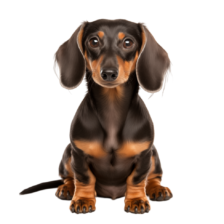
This is the original dachshund, the full size hunting dog in the classic short coat most people picture first. At 16 to 32 pounds it feels sturdy in your arms and needs almost no coat care beyond a weekly wipe and an occasional bath. My notes on the short haired dachshund cover its loyal, sometimes one person nature in more detail.
Standard Longhaired
The standard longhaired carries the same solid frame under a soft, flowing coat with feathering on the ears, chest, legs and tail. Owners often tell me this version feels a touch calmer at home, though every dog differs. Plan on brushing several times a week to stop tangles, as my guide to the long haired dachshund explains step by step.
Standard Wirehaired
The standard wirehaired is the rugged one, built for rough ground and cold weather, with a harsh outer coat, a soft undercoat, a beard and strong eyebrows. It is often the boldest and funniest of the nine types in my experience. The coat needs brushing and periodic hand stripping, which my profile of the wire haired dachshund breaks down for new owners.
Miniature Smooth
The miniature smooth packs the classic look into 11 pounds and under, which is why so many apartment dwellers land here. The coat care is identical to the standard smooth, just on less dog. Some minis startle more easily at noise and rough handling, so gentle routines suit them well, a point I return to in my dachshund coat types overview.
Miniature Longhaired
This is the combination I see most often in photos sent to me, a tiny dog with a silky coat and a plumed tail that seems made for the camera. The grooming load is the highest of the miniature group because that feathering mats fast behind the ears and under the chest. Daily quick brush throughs beat one long weekly session here, and small size never means low exercise needs.
Miniature Wirehaired
The miniature wirehaired looks like a small, bearded character from a storybook, and it often acts like one too. Expect energy, opinions and a rough coat that shrugs off wet grass on walks. Stripping keeps that texture correct and reduces shedding around the house, and because the dog is small, each grooming session is short once you learn the routine.
Kaninchen Smooth
The Kaninchen smooth is the smallest smooth of all, bred in Germany to follow rabbits into burrows too tight for a miniature. Kaninchen means rabbit, and the FCI judges this size by chest circumference rather than weight alone. My comparison of Kaninchen vs miniature dachshund sizes shows how close, and how confusing, the line between them can be.
Kaninchen Longhaired
A Kaninchen longhaired is a very small dog wearing the most demanding coat, so the grooming to dog ratio is the highest of the nine. The hair is fine and soft, and it tangles quickly if you skip days. In North America you will rarely see one listed honestly, since the AKC does not recognise this size, so ask any seller exactly how they measured the parents.
Kaninchen Wirehaired
The Kaninchen wirehaired is the rarest combination on this page, a tiny working terrier style coat on the smallest dachshund frame, with the beard and eyebrows still present in miniature. The harsh coat needs proper stripping to stay harsh, and finding one outside Europe takes patience and careful checking of how sellers measure their dogs. Smallest does not mean quietest, and this little dog usually has the full dachshund courage.
Because the AKC does not recognise the Kaninchen at all, a dog sold as one in North America carries no AKC size class on its papers. Ask the seller to show the pedigree and the chest measurement, and check both against the FCI figures above before you pay a premium for the label. Our guide to finding a reputable dachshund breeder lists the records to request and the answers that should end the conversation.
Which Combination Fits Your Life
Size and coat decide the daily reality, so match them to your home before you fall for a colour. A miniature smooth fits a small flat and a quiet routine, while a standard wirehaired suits a house with a garden and an owner who enjoys a dog with strong opinions and energy to spend.
Families with small children usually do better with a standard, because the sturdier frame forgives clumsy hugs that a tiny miniature feels. Longhaired dogs of any size ask for brushing time every week, so pick that coat only if grooming sounds like pleasure rather than a chore. Our guide to dachshunds in apartments walks through space, stairs and noise for flat dwellers, and the cost guide shows how price shifts with size, coat and rarity.
Colours and Patterns Sit on Top
Once you have picked size and coat, colour is pure decoration. Reds run from pale gold to deep mahogany, and black and tan dogs carry tan points over the eyes, on the muzzle, chest and paws. The PetMD dachshund breed guide lists the colours and patterns most registries accept.
Patterns need a little more care than plain colours. My guide to the dapple dachshund explains the marbled patches and why two dapple parents should never be bred together. If white patches are involved, my breakdown of piebald vs dapple dachshund patterns will help you tell them apart at a glance.
Brindle striping, piebald white patches and plain solid coats all appear across the nine combinations. None of them changes health, temperament or type on its own. Pattern only matters for health when two dapple dogs are bred together, which is why that pairing matters so much.
My own rule is simple. Choose the size that fits your home, the coat that fits your grooming time, and let colour be the last and lightest decision. The dog underneath the pattern is what you will live with for the next 12 to 16 years, and our guide to the dachshund lifespan walks through what those years usually look like, from the busy first year to the slower senior ones.
What Is a Dachshund Mix?
A dachshund mix is a cross between a dachshund and another breed, and it takes something from each parent, so no two mixes look or act quite the same. The long body and short legs often come through, but size, coat and temperament follow the other parent as much as the dachshund, which is why a mix can surprise even experienced owners.
The best known mixes show how wide the range runs. A Chiweenie, a dachshund crossed with a Chihuahua, stays small and bold, while a Dorgi, a dachshund crossed with a Welsh Corgi, is sturdier and often a little calmer. Before choosing any mix, look at both parents for health and temperament, and read the mix guides for the cross you are considering.
If you want the full list, our roundup of 15 popular crosses of dachshund breeds covers the best known mixes in one place.
A mix can inherit the dachshund back, so the same care applies. Keep the dog lean, use ramps for furniture and cars, and ask the breeder or rescue about back history in both lines. Our guide to IVDD and back problems explains the warning signs worth knowing before they appear.
Frequently Asked Questions
How many types of dachshunds are there?
Nine, if you count the European Kaninchen size. Three sizes, standard, miniature and Kaninchen, each come in smooth, longhaired and wirehaired coats, and colours sit on top of those nine. The AKC recognises only the two larger sizes, so its official count stops at six.
What is a Kaninchen dachshund?
It is the smallest size class, recognised by the FCI in Europe but not by the AKC. The name means rabbit in German, because these dogs were bred to work rabbit burrows. The FCI classes them by chest circumference, not weight alone.
Which dachshund type needs the most grooming?
Longhaired dogs need the most regular work, with brushing several times a week in any size. Wirehaired dogs need brushing plus periodic hand stripping. Smooth dogs need the least, usually a weekly wipe and an occasional bath.
Do the different types have different personalities?
Only as loose tendencies, never as guarantees. Wirehaired dogs often seem livelier, longhaired dogs a little gentler, and smooth dogs strongly devoted to one person. Breeding, early socialisation and daily life shape character far more than coat alone.
What is a tweenie dachshund?
Tweenie is owner slang for a dog who falls between miniature and standard size, usually around 12 to 16 pounds. It is not an official class in any registry. A tweenie is still a full dachshund, just harder to place on the size chart.
What is a dachshund mix?
A dachshund mix is a cross between a dachshund and another breed, taking traits from each parent. Popular mixes include the Chiweenie and the Dorgi, and each one varies in size, coat and temperament. Check both parents for health and temperament before choosing one.
What are the different types of dachshunds?
Three sizes and three coats make nine types: standard, miniature and Kaninchen, each in smooth, longhaired or wirehaired. Colours and patterns like dapple and piebald add more variety on top.

[…] and maneuver in tight spaces. Today the breed comes in two main sizes: standard and miniature. Both types share the same coat varieties – smooth, longhaired, and wirehaired – and the same lively […]
[…] dental disease is common in small breeds. Brushing their teeth several times a week and providing dental chews supports oral […]
[…] Also Read: How Many Types of Dachshunds Are There? A Simple Guide […]
[…] monthly, since weight changes and coat thickness (especially for long-haired dogs) affect it. See the different Dachshund coat types if you are fitting a fluffy […]
[…] eyes. Sizes and coats vary, and each combination has its own grooming needs. Our guide to the different types of Dachshunds breaks down every […]
[…] guide to the types of dachshunds walks through those sizes in plain owner language. In Germany there is also a third, smaller size […]
[…] guide to the types of dachshunds walks through those coats and colours in full. Smooths need the least work, longhairs need regular […]
[…] for a mini to 32 pounds for a big standard. You can read the full breakdown in my guide to the types of dachshunds if you want the complete […]
[…] names come straight from colour and pattern. If you are still learning the options, my guide to the types of dachshunds walks through the coats, sizes and hair types in plain […]
[…] off thorns and brambles. Each coat answered a different terrain, which is why our guide to the types of dachshunds reads like a map of old hunting […]