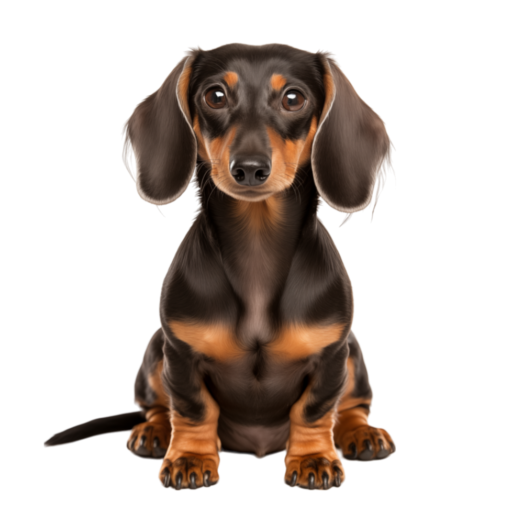


People ask me about dachshund sizes more than almost anything else. The long body fools everyone, and two dogs that look alike at first glance can differ by 20 pounds as adults.
That gap changes real life. It affects the crate you buy, the food you measure, the harness that fits, and how much dog you are lifting into the car.
I have lived with both sizes over the years, and I still weigh and measure mine at home. This guide pulls together the official size rules, a puppy growth chart, and the measuring method I actually use.
The Two Official Sizes
In the United States, the dachshund comes in two official sizes: standard and miniature. The split is decided by adult weight, not by height, length, or coat type.
A standard dachshund weighs 16-32 lb (about 8-14.5 kg) as an adult. Most stand 8-9 inches tall at the shoulder and measure roughly 21-25 inches from chest to tail base.
A miniature weighs 11 lb (5 kg) and under at 12 months of age. Most minis stand about 5-6 inches at the shoulder, so the height gap is easy to spot once you know it.
The AKC dachshund breed standard sets out those weight classes in full. I keep it bookmarked because it settles most size arguments in about ten seconds.
What about a tweenie?
Dogs that land between 11 and 16 lb often get called tweenies by owners. It is a handy nickname, but it is informal and appears in no official standard.
A tweenie is still registered and judged as either a miniature or a standard. If your dog sits in that middle band, care for the dog in front of you and ignore the label.
Does coat type change size?
No, coat type does not change the frame underneath. Smooth, longhaired, and wirehaired dachshunds all follow the same weight classes in each size.
A longhaired dog can look bigger because the coat adds volume around the chest and legs. Put a tape and a scale on both dogs and the measurements usually tell a calmer story.
Standard vs Miniature: Which Suits You?
This is the section I wish someone had handed me before my first puppy. The two sizes share a breed, a history, and a stubborn streak, but daily life with each one feels different.
Size and weight in daily life
A standard at 20-30 lb is a solid, sturdy small dog. You feel that weight on stairs, in a carrier, and when you lift the dog after a muddy walk.
A miniature at 9-11 lb is far easier to carry and bathe. Many minis fit in a cabin carrier for flights, while a standard needs a much bigger travel plan.
Food, medication doses, crates, and beds all scale with that weight gap too. The monthly cost difference is modest, but it is real and it adds up over 14 or more years.
Temperament and personality
Both sizes are bold, curious, loyal, and quick to announce a visitor at the door. Both can be stubborn in training, and both bond hard to their favourite person.
In my experience, minis often run a little more sensitive and a little more vocal. Standards often seem a touch calmer and more confident around strangers and bigger dogs.
Treat those points as tendencies, not promises. Breeding, early socialisation, and steady training shape temperament far more than a few pounds ever will.
Living space and exercise
Minis adapt very easily to flats and small homes. Their exercise needs sit at the lower end, usually around 30 minutes of walking plus play each day.
Standards do well in flats too, as long as the walks actually happen. Most want 30-45 minutes a day and have more stamina for longer weekend outings.
In a house with a garden, either size settles in happily. The real deciding factor is your routine, your stairs, and how much lifting your own back can handle.
My honest take on choosing
Pick the miniature if you live in a small space, travel often, or need a dog you can lift without thinking twice. Pick the standard if you want a sturdier companion for active days and rougher family play.
If you are torn, look at the parents and ask hard questions about adult weights. My guide to kaninchen and miniature size classes also helps if you are comparing European size labels.
Weight by Age: Puppy Growth Chart
Puppies grow fast at first and then fill out slowly. Most dachshunds reach near adult height and length by 8-12 months, while weight and muscle keep building until about 18 months.
Use the chart below as a guide to typical ranges, not as a pass or fail test. Healthy puppies from the same litter can sit a pound or two apart and both be doing fine.
| Age | Miniature typical weight | Standard typical weight |
|---|---|---|
| 8 weeks | 2-3 lb (0.9-1.4 kg) | 3-5 lb (1.4-2.3 kg) |
| 3 months | 3-4.5 lb (1.4-2 kg) | 6-9 lb (2.7-4.1 kg) |
| 4 months | 4.5-6 lb (2-2.7 kg) | 8-12 lb (3.6-5.4 kg) |
| 6 months | 6.5-8.5 lb (2.9-3.9 kg) | 11-17 lb (5-7.7 kg) |
| 9 months | 8-10 lb (3.6-4.5 kg) | 14-24 lb (6.4-10.9 kg) |
| 12 months | 9-11 lb (4.1-5 kg) | 15-28 lb (6.8-12.7 kg) |
| Adult | 11 lb (5 kg) and under | 16-32 lb (8-14.5 kg) |
By 3 months, many puppies sit near a third of their adult weight. By 6 months, most are near two thirds, and growth slows in a clear way after 9 months.
I weigh puppies monthly on kitchen scales, then on bathroom scales as they grow. Steady gains matter more than fast gains, and a sudden stall or drop is a reason to call your vet.
Bringing a puppy home soon? My new dachshund puppy checklist covers the scales, bowls, and basics I set up before day one.
How to Measure Your Dachshund
Weight tells you the size class, but chest size tells you what actually fits your dog. I measure the chest before I order any harness, coat, or jumper, every single time.
- Stand your dog squarely on a flat floor and let the dog settle in a natural stance.
- Find the widest point of the chest, just behind the front legs.
- Wrap a soft tape measure around the chest at that widest point, keeping the tape level all the way round.
- Pull the tape snug against the coat, not tight into the skin, so the dog can still breathe and move freely.
- Check that you can slip two fingers between the tape and the chest, then read the number where the tape meets.
- Measure twice, write the number down in centimetres and inches, and measure again after any weight change.
Chest size matters because dachshunds have deep, broad chests on small frames. A harness sized by weight alone often slips, rubs behind the legs, or lets a determined dog back straight out of it.
Coats and jumpers follow the same rule, since a poor chest fit bunches fabric and leaves the back exposed. My tested picks in the best harnesses for dachshunds guide all start from a proper chest measurement.
While you have the tape out, measure height at the withers too. Stand the dog straight, find the ridge between the shoulder blades, and measure down to the floor.
What Shapes Adult Size
Parents and genetics
The parents are still the best predictor of adult size. Puppies from two 20 lb standards usually land close to 20 lb themselves, give or take a few pounds.
Ask to see both parents and ask about weights from earlier litters. Good breeders and good rescues track this, and the honest ones answer without any fuss.
Food, exercise, and health
Good food lets a puppy reach the size it was built for. Underfeeding can stunt growth, while overfeeding only builds fat, never a bigger frame.
Daily exercise builds muscle and shape, not height. Keep puppy play gentle and self led, and skip forced runs and big jumps while joints are still growing.
Parasites, illness, and hormone problems can all slow or distort growth. Regular vet checks catch those early, and the PetMD dachshund breed profile gives a useful overview of breed health alongside your vet visits.
Big or Overweight? How to Tell
This mix up causes more worry than any other size question I hear. A big framed dog and an overweight dog can weigh the same, yet need very different care.
Look down at your dog from above and look for a clear waist behind the ribs. From the side, the belly should tuck up rather than hang low and level.
Run flat fingers over the ribcage with light pressure. On a healthy dog, you should feel the ribs easily but not see them through the coat.
My full breakdown of how much a dachshund should weigh walks through body condition scoring step by step. It is the page I send friends to before any diet talk starts.
Extra weight hits this breed harder than most. It loads the long spine and raises the risk of disc disease, sore joints, and diabetes over time.
Living Well at Any Size
Size planning at home is simple once you think in terms of the back. Ramps by the sofa and bed, non slip rugs on hard floors, and a harness on every walk protect both sizes equally.
Choose a crate your dog can stand, turn, and stretch in, not just one matched to a weight label. Standards usually need a crate sold for a 30 lb dog, while most minis settle in one size down.
Both sizes love to burrow, so blankets and a covered bed earn their keep fast. A warm, tired dachshund under a blanket is, in my house, a problem already solved.
Keep portions measured, weigh your dog every few months, and recheck that chest measurement as weight shifts. Small habits like those do more for a long, comfortable life than any single purchase.
Frequently Asked Questions
How big does a standard dachshund get?
A standard adult weighs 16-32 lb and stands 8-9 inches at the shoulder. Most settle somewhere in the low to mid 20s in pounds.
How much should a miniature dachshund weigh?
A miniature should weigh 11 lb (5 kg) and under at 12 months. Many healthy adults sit between 9 and 11 lb.
What is a tweenie dachshund?
Tweenie is an informal owner nickname for a dog between 11 and 16 lb. It is not an official size class in any breed standard.
At what age is a dachshund fully grown?
Most reach adult height and length by 8-12 months. Weight and muscle keep filling out until about 18 months.
How do I measure my dachshund for a harness?
Wrap a soft tape around the widest point of the chest, just behind the front legs. Keep it snug, not tight, and allow room for two fingers.





[…] enough for apartment life and easy travel, sturdy enough for real play. See how Dachshund sizes compare for context on where the mix […]
[…] and deep chest powered the push through soil and roots. Size still matters today, and you can read how big a full-size dachshund gets compared with its smaller […]
[…] by weight and chest girth under official breed standards. Not sure where your dog fits? Our dachshund size guide lays out all three […]
[…] and wirehaired). The AKC places the breed in the Hound Group, honoring its hunting roots. See Dachshund size varieties for the details, and the AKC’s official Dachshund breed page for the full […]
[…] The bed should allow a full stretch, since curled-only sleeping can stiffen backs over time. Our Dachshund size guide helps if you are unsure whether you have a standard or […]
[…] sizes, consider your dog’s build: deep-chested Dachshunds often need the larger size. Our Dachshund size guide helps with overall […]
[…] Females tend to be finer boned with a slightly more refined head. None of this is dramatic, and plenty of females outweigh males from other litters. For the full range of what to expect, see our breakdown of dachshund sizes. […]
[…] pounds, miniatures weigh 11 pounds and under, and the Kaninchen is smaller still. My full guide to dachshund sizes walks through weights, chest measurements and the tweenie dogs who fall between […]
[…] the crate you buy, the food bill and the kind of life the dog fits into, so think through the miniature vs standard dachshund choice before you fall for a photo […]